
Last updated November 16, 2026
 Sweep & inspection
 Caps & crowns
 Flue relining
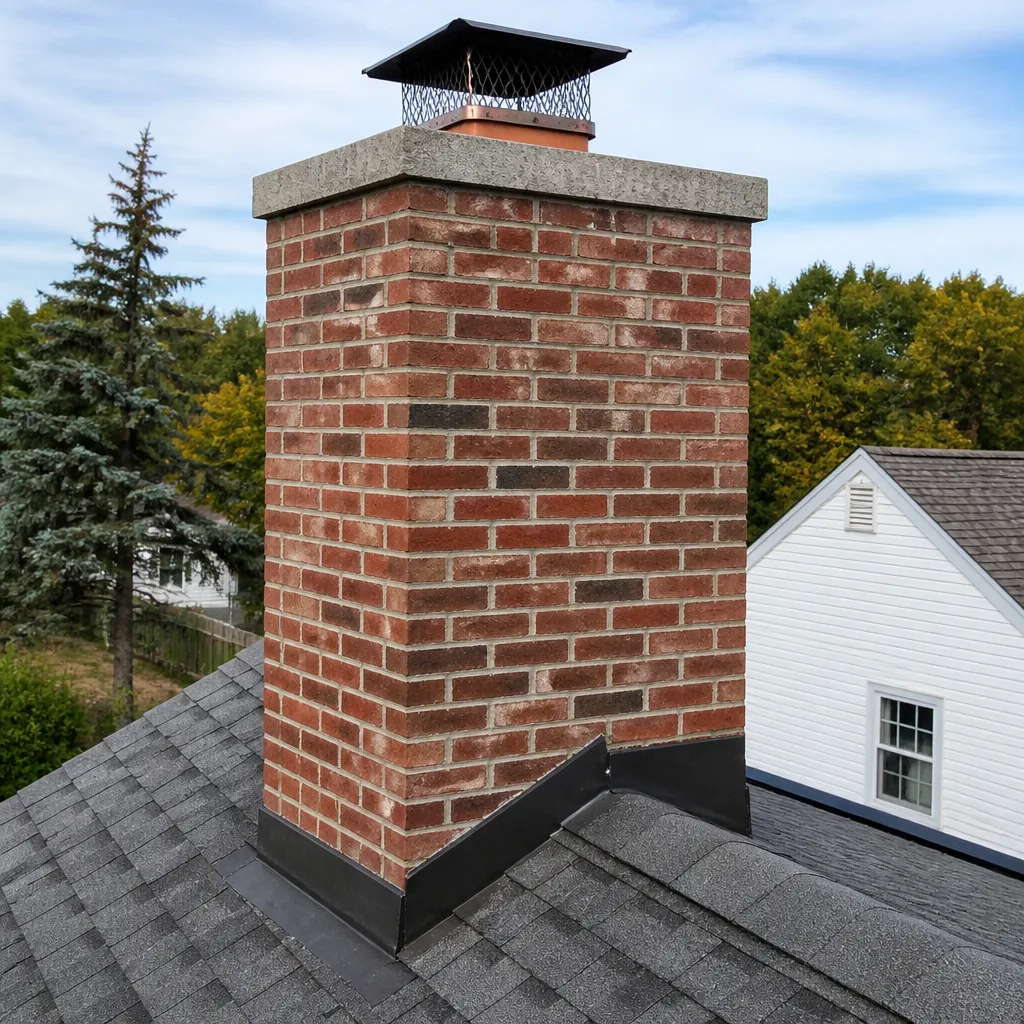 Masonry repair
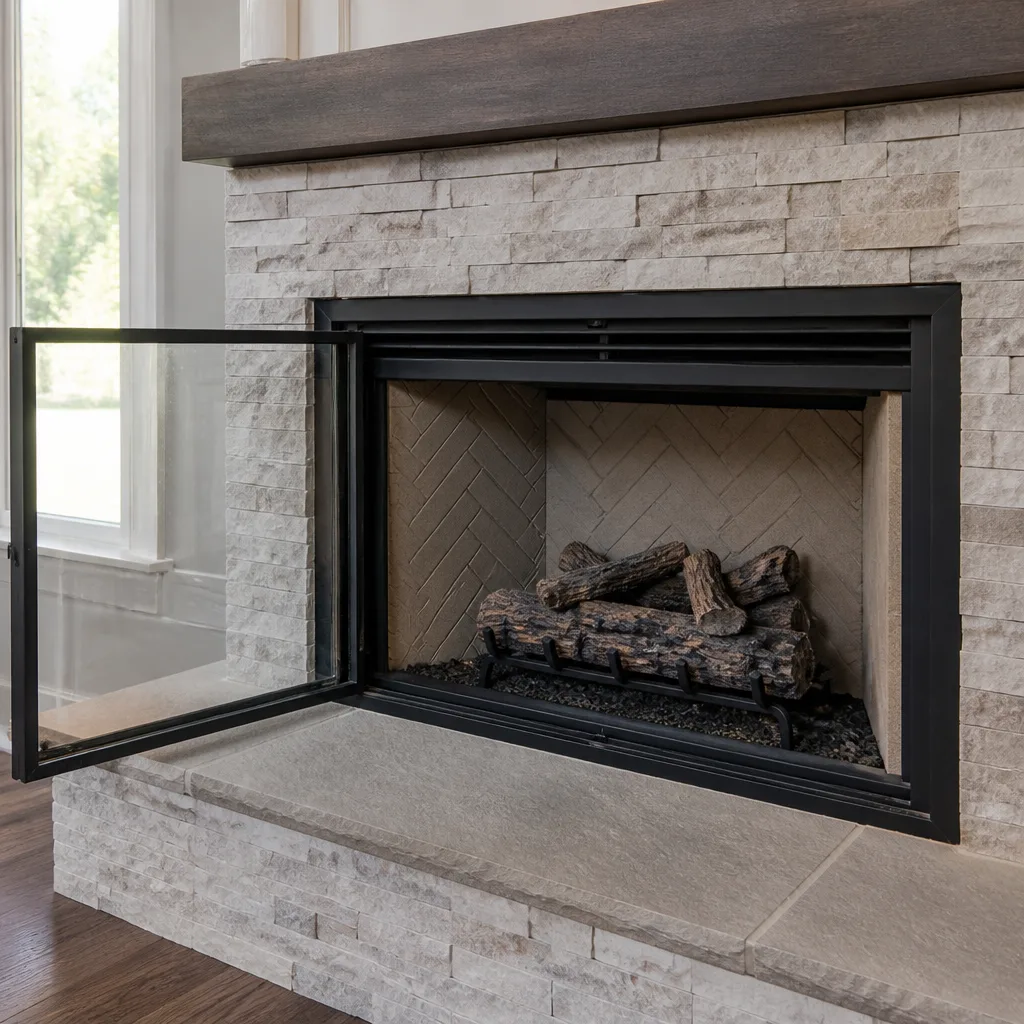 Gas fireplace service
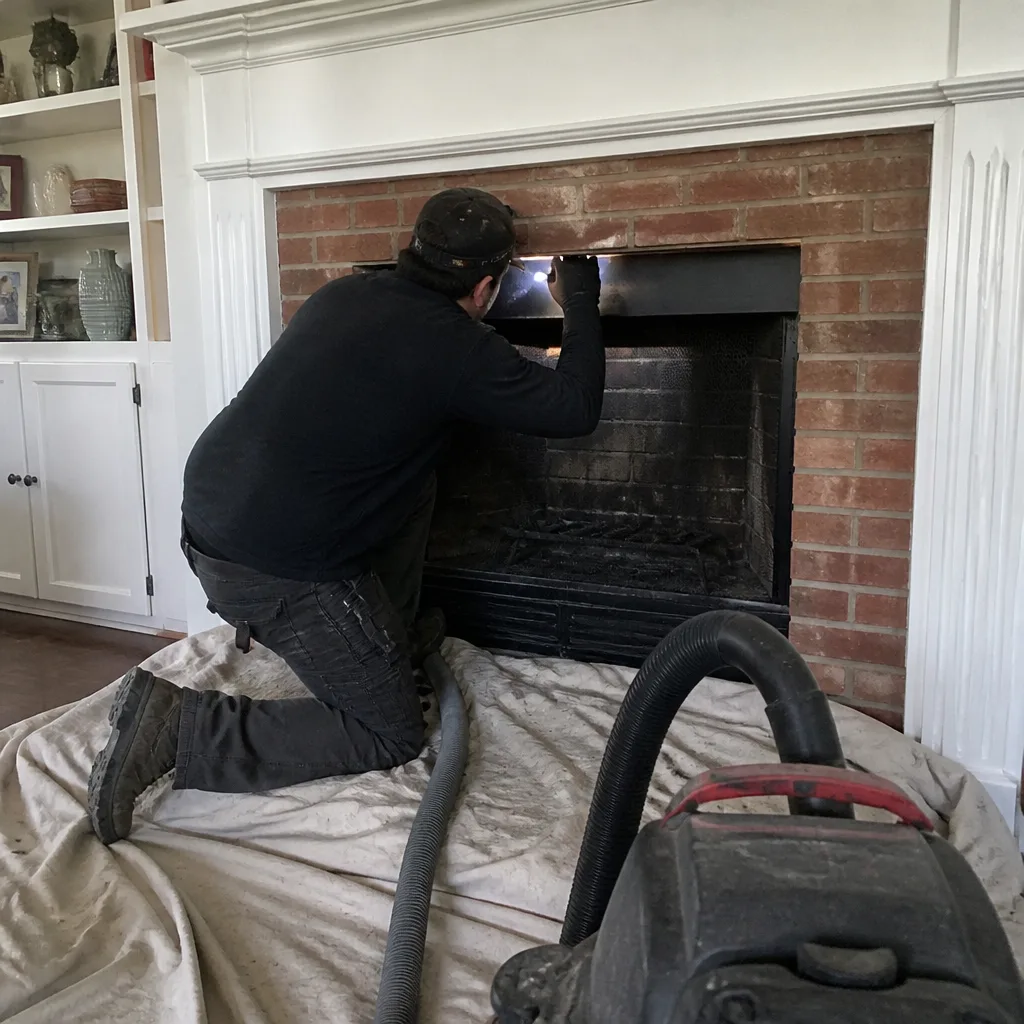
Level 1 sweep and inspection to the NFPA 211 annual standard - flue, crown, cap, and flashing checked and photographed
Chimney sweep logs do not sweep chimneys. They loosen some creosote - which then falls where a brush and vacuum still have to collect it.
Chimney Cleaning Warning Signs: A Wilmington Homeowner’s Reference Guide
A white stain running down your chimney exterior isn’t cosmetic. It’s efflorescence, and it means water is moving through your masonry. By the time you can see it from the yard, it’s already been working on the inside for a while. Most chimney problems don’t announce themselves with smoke in the living room. They start as a faint smell, a slight change in draft, a small stain you tell yourself you’ll look at later. The homeowners who end up paying the most are usually the ones who waited for something obvious. This guide walks through the early signals Wilmington homeowners walk past every day, which ones mean stop using the fireplace now, and how to describe what you’re seeing so a professional gives you a straight diagnosis.
Quick Answer
The chimney warning signs that matter most in Wilmington are efflorescence and spalling on the exterior, a rusted or missing cap, a cracked crown, smoke rolling back into the room, musty or creosote odors that don’t clear, and a draft that’s gotten noticeably weaker or stronger. Visible water staining, spalling brick, or smoke entering the living space means stop using the fireplace until it’s inspected. Most other signs can wait for a scheduled appointment.
Styles & brands we work with
- Sweep & inspection
- Caps & crowns
- Flue relining
- Masonry repair
- Gas fireplace service
Table of Contents
- Exterior Warning Signs Wilmington Homeowners Walk Past
- Interior Signals That Point to Specific Problems
- Why Wilmington’s Humidity Makes a Musty Chimney Worth Taking Seriously
- Smoke Rollback and Draft Problems
- Mapping Chimney Odors to Their Causes
- Stop Using the Fireplace Now vs. Schedule an Inspection
- How to Describe What You’re Seeing
- Your Pre-Season Chimney Checklist
Exterior Warning Signs Wilmington Homeowners Walk Past
You can learn a lot about a chimney’s health without climbing on the roof. Stand on the ground and look up. The exterior of a chimney tells you what’s happening inside it, often months before anything shows up in the firebox.
Efflorescence. That white, chalky staining is salt drawn to the surface by water moving through the brick and mortar. It’s the single most overlooked sign in Wilmington homes with older chimney stacks. Efflorescence itself doesn’t damage brick, but it proves moisture is getting in. Where water goes in, freeze-thaw cycles and constant wetting follow.
Spalling. When brick faces flake, peel, or pop off and land on the roof or ground, the masonry has absorbed enough water to break down. Spalling means the chimney has moved past warning into active deterioration. It won’t fix itself, and the longer it goes, the more of the stack needs rebuilding rather than repair.
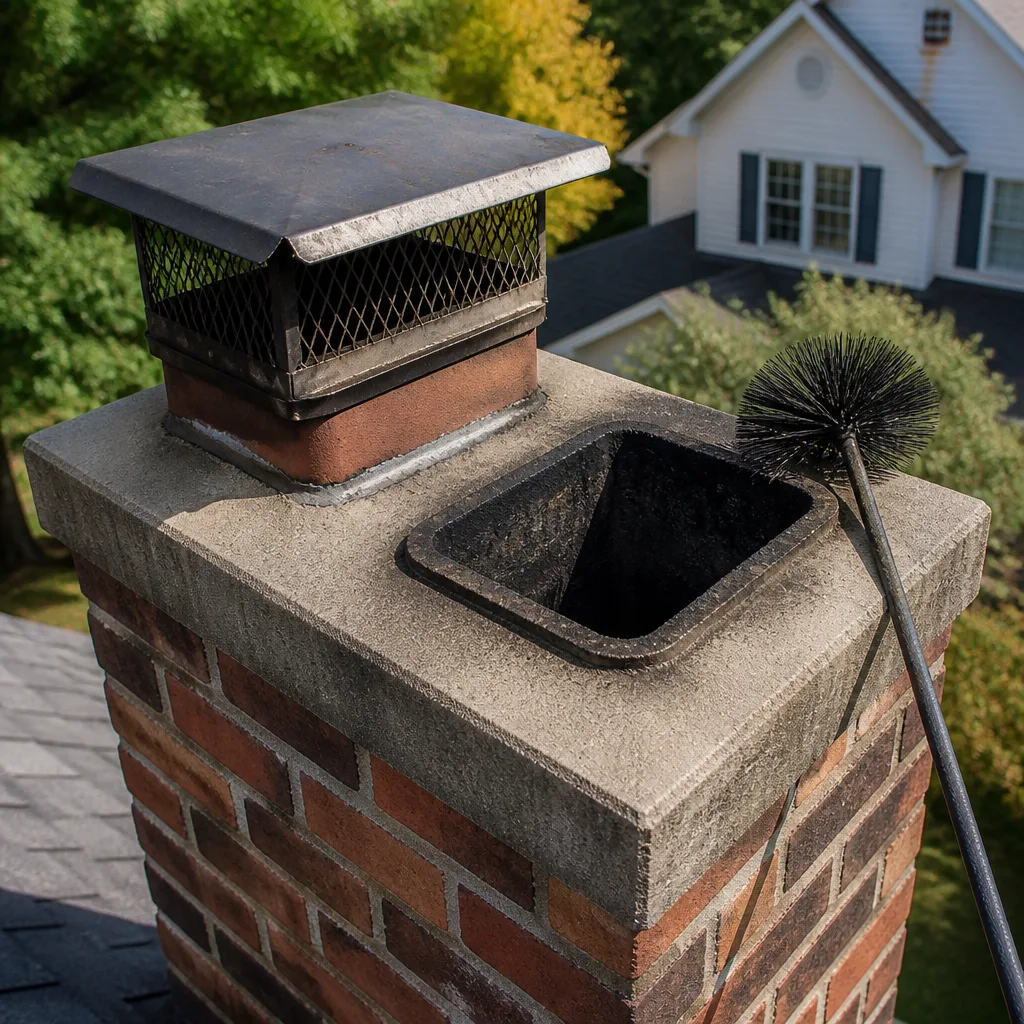
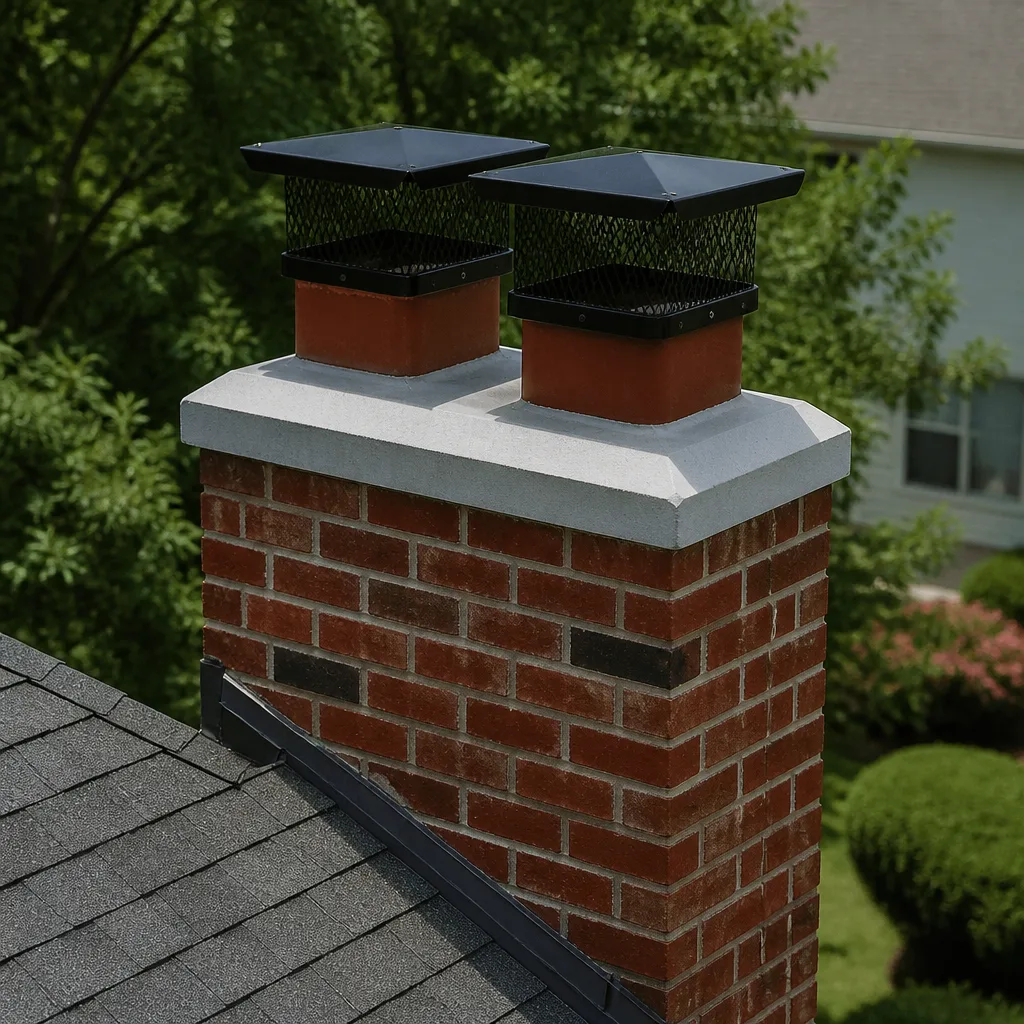
Rusted or missing cap. A chimney cap keeps rain, animals, and debris out of the flue. When it rusts through or goes missing, water enters directly. This is one of the most common things we find on older Wilmington homes, and it’s also one of the easiest to correct. A proper cap is fitted to your flue, not borrowed from a hardware-store shelf. We use professional-tier components from lines like Famco and Copperfield specifically because they fit the flue you have.
Damaged crown. The crown is the sloped concrete top that sheds water away from the masonry. Hairline cracks are common and can often be sealed. Crowns that are crumbling, detached, or missing outright let water straight into the top of the stack, and that water has nowhere to go but down.
Cracked or missing mortar joints. Receding mortar between bricks lets moisture in behind the joints. If you can push a screwdriver tip into the mortar and it crumbles, the joint has failed its job.
None of these require you to get on your roof to check. If you can’t see your chimney from the ground, take a phone photo from across the yard and look at it there.
Interior Signals That Point to Specific Problems
Inside the house, the chimney gives you a different set of clues. Each one tends to point at a specific cause, which is why it’s worth writing down what you notice and when.
- Smoke rolling back into the room when you open the glass doors or light a fire usually means the flue isn’t drawing properly. Common causes are a blockage (soot, a bird nest, a fallen cap), a flue that’s too short for the firebox, or negative pressure in a tightly sealed house.
- A weak draft that used to be strong can come from a partial obstruction, a change in the surrounding roofline, or a firebox that’s gotten dirtier than you realize.
- Soot flakes or creosote dust falling into the firebox point to a flue that hasn’t been swept in a while and is beginning to shed deposits.
- Dark stains on the firebox walls that weren’t there last season suggest smoke is not traveling the path it should be.
- Water stains on the ceiling or walls near the chimney mean water is entering from above and finding a path into the house. This is the sign that most often gets put off, and also the one most likely to be expensive later.
- A damper that sticks, drops, or won’t close can leave heated air escaping up the flue when the fireplace isn’t in use, and prevent proper control of the fire when it is.
If more than one of these shows up at the same time, don’t try to sort out which is the “real” problem. Note all of them and describe them together. A pattern of clues leads to a better diagnosis than any one symptom alone.
Why Wilmington’s Humidity Makes a Musty Chimney Worth Taking Seriously
A musty smell coming from the chimney is the sign most Wilmington homeowners dismiss. In a humid climate, “it’s just the weather” feels reasonable. It usually isn’t.
Wilmington’s warm, wet summers mean the masonry of an unused chimney can hold moisture for weeks at a time. Add a missing or damaged cap, a cracked crown, or failing mortar, and water has a clear path in. Once it’s inside, the chimney becomes a cool, damp, dark cavity year-round. That’s exactly the condition that supports mold growth and the breakdown of the flue liner from the inside out.
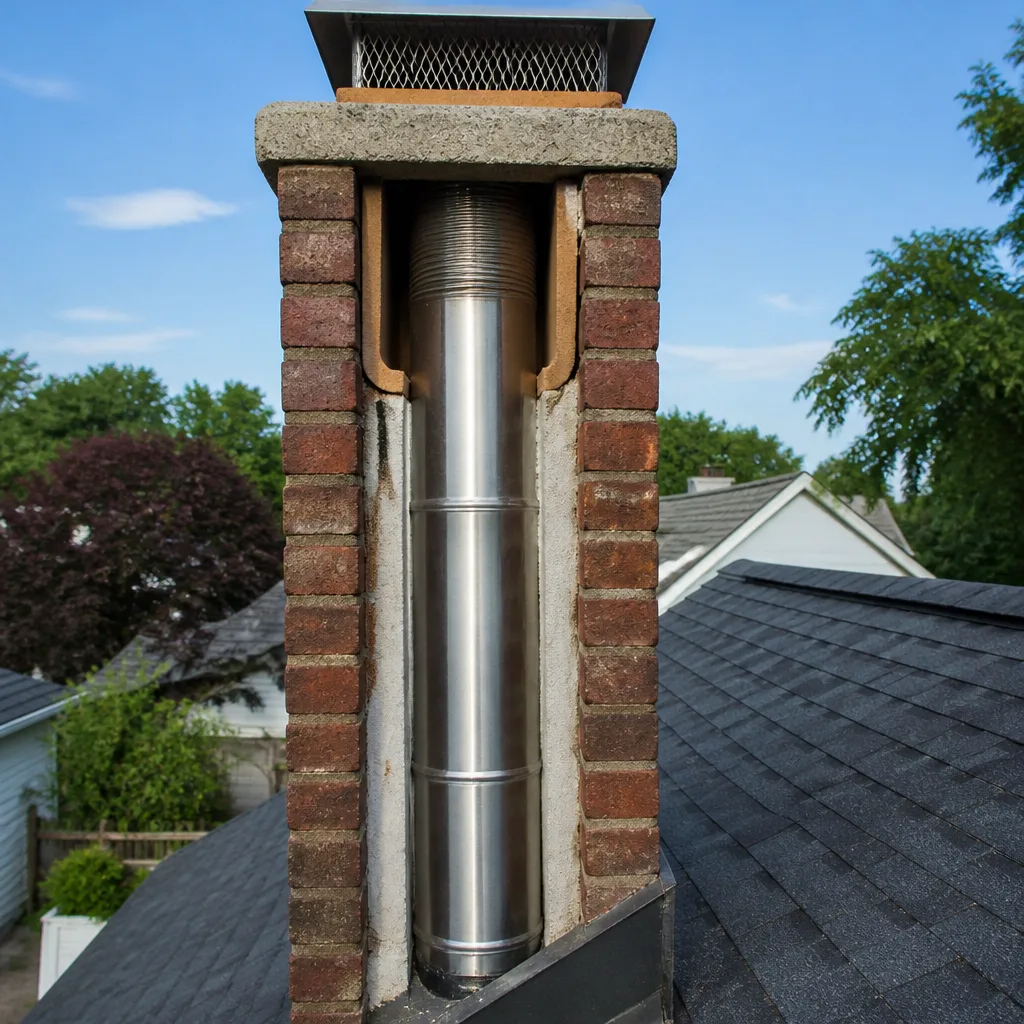
A musty smell isn’t just a nuisance. It’s a signal that the chimney is holding water somewhere it shouldn’t. Where the water is coming from and how far it’s gotten takes a proper look. When we examine a chimney in this condition, we check the flue liner carefully. Clay tile liners crack and spall when they stay wet, and once they do, the flue no longer contains combustion gases the way it should. If we find a liner that’s deteriorated but still structurally sound enough to save, a resurfacing product like HeatShield can often extend its life without a full replacement. If the liner has failed, a flexible liner system like DuraFlex is the durable fix. The right answer depends on what the flue actually looks like inside, which is why we don’t guess over the phone.
There’s a second reason to take the smell seriously in a humid climate: a musty odor can be the first way you notice a downdraft. When the outdoor air is warmer and heavier than the air in the flue, the chimney can push air *down* into the house. That air carries whatever the flue and firebox are holding, and if the flue has any moisture problem, the smell is stronger. A chimney sweep in Wilmington often finds the same picture: afternoon downdrafts in the summer, dry wood burned in the winter, and a liner that’s been wet on and off for years.
Smoke Rollback and Draft Problems
Smoke rolling back into the room is the chimney sign most people can’t ignore, and for good reason. Here’s what’s usually behind it.
- Blockage in the flue. A nest, a fallen piece of cap, soot buildup, or a collapsed liner section will choke the exhaust path. The smoke has nowhere to go but out the front of the firebox.
- A flue that’s mismatched to the firebox. If the firebox opening is large and the flue is small, the chimney can’t pull enough air to clear the smoke. This is common in older homes with fireplaces that were modified over the years.
- Negative pressure in the house. Tightly sealed homes, kitchen exhaust fans, and bathroom fans all pull air out. If the chimney can’t get enough make-up air, it backdrafts.
- Cold flue. On a cold start, the flue is full of cool air that’s heavier than the room. Until the flue warms up, smoke can spill. A slow, warming first fire usually helps, but if the rollback keeps happening, that’s a different problem.
- Chimney height relative to the roofline. A chimney that’s too short or that sits next to a taller gable can be in a pressure zone that pushes air down.
If removing a blockage isn’t the fix, we’re looking at a system problem. The remedy could be a screen on top, a different cap, a correction to chimney height, or a flue that’s relined to the right size for the firebox. Getting the diagnosis right matters more than getting a fix in fast.
Mapping Chimney Odors to Their Causes
Different smells come from different problems. Here’s how we map what homeowners describe to what we look for.
- Musty, damp smell. Points to moisture intrusion. Look for efflorescence, spalling, a damaged crown, or a rusted cap.
- Strong, sharp, smoky smell that lingers after the fire is out. Overdue for a sweep. Creosote deposits in the flue hold the smell and long term become a chimney fire risk. This is the “smell that won’t clear” homeowners describe in the fall before the first cold snap.
- Smell of asphalt or tar. Points to glazed, third-degree creosote forming in the flue, usually after a season of hot, smoky fires with poorly seasoned wood. This is a stop-and-sweep-now situation because of the fire risk.
- Chemical or ammonia-like smell. Points to an animal nesting in the chimney, or to a flue that hasn’t been cleaned in a long time and needs a proper scrub.
- Damp, earthy smell coming down into the room when the fireplace is off. Usually a downdraft carrying cool, humid air down a cold flue, which is common in Wilmington’s summer afternoons.
If you can’t match your smell to a row above, don’t force it. Tell us what it reminds you of and when you notice it. Both details help more than a label.
Stop Using the Fireplace Now vs. Schedule an Inspection
This is the decision homeowners call us about most often, and the answer matters. Some signs are emergencies, and some are just things to put on the calendar.
Stop using the fireplace immediately if:
- Smoke is rolling back into the room from a fire that should be drafting cleanly.
- You can see fire or glowing embers in the flue, or hear a low, roaring sound that isn’t the fire in the firebox.
- Creosote flakes come down into the firebox, or you smell tar or asphalt from the fireplace or chimney.
- There’s a visible crack in the flue liner, or a piece of the liner has come loose.
- Water is actively coming down into the firebox, or the ceiling and wall around the chimney are wet.
- The chimney has visible spalling brick or a piece of masonry has fallen.
- The chimney has been hit by lightning, taken damage in a storm, or shifted as a whole from the house.
Schedule an inspection, don’t stop using the fireplace, if you notice:
- Efflorescence without spalling.
- A rusted or missing chimney cap.
- Hairline cracks in the crown.
- A musty smell in the summer that clears when the fireplace is in use.
- The fireplace has been used for a full season without a sweep.
- A musty smell that’s new this year but the fireplace still draws fine.
- The damper needs help to open or close.
None of this stops you from calling today. But if you have any of the first list, put the fire out and call us before you light the next one. Safety first, then scheduling.
How to Describe What You’re Seeing
A clear description of your symptoms gets you a faster, more accurate diagnosis than a vague “something’s wrong with the chimney.” Here’s how to prepare before you call a chimney repair specialist.
- Note the signs in your own words. Not “bad smell,” but “damp smell that’s strongest on hot afternoons when the fireplace is off.”
- Say when you first noticed it, and whether it’s changed. New, worse, better, or the same matters.
- Write down anything you’ve changed recently. New windows, added insulation, a new kitchen exhaust fan, a different wood supplier. All of these can change chimney performance.
- Photograph your exterior chimney from the ground. Photos of staining, cracks, the cap, or the crown help frame the conversation before we arrive.
- Say how much you use the fireplace, and what you burn. Seasoned wood, unseasoned wood, pressed logs, or gas inserts all point to different answers.
- Describe any smoke rollback in detail. Does it happen on cold start, only after the flue warms, only on windy days, or only when kitchen fans are running?
- Mention if the stove or insert is new. A different appliance sometimes needs a different flue setup than the one the chimney was built with.
A good chimney service should be able to look at what you describe and know where to start. If someone quotes you a liner replacement over the phone without asking any of these questions, that’s a sign to get a second look, not a signal to book the work.
Your Pre-Season Chimney Checklist
Doing these six things before the first fire of the season catches most problems before they become repairs.
- Look at the exterior from the ground. White staining, flaking brick, a rusted cap, or a cracked crown. Note anything you see.
- Open and close the damper. It should move smoothly and open fully. If it sticks or falls, that’s worth a service call.
- Look up the flue with a flashlight. You won’t see everything, but you can spot a clear blockage, visible cracks in the liner, or heavy soot buildup.
- Smell the firebox when the fireplace is cold. Musty, damp, tar, or animal smells are all worth noting and describing when you call.
- Check the firebox walls for new staining or cracking. Compare to how it looked last year.
- Check the woodpile. Burn seasoned wood that’s been split and dried, and keep it covered. Wet wood creates more creosote and more smell, which matters in a humid climate.
Any checklist item that turns up a real problem is worth a call. The rest of the checklist just keeps you from being surprised. If it’s been a year or more since the last sweep, this is the year to book one.
Common Mistakes to Avoid
- Painting over efflorescence. A coat of paint hides the stain but traps moisture inside the masonry, which speeds up the damage. Fix the water source first.
- Assuming a musty smell will air out. In a Wilmington summer, an unused chimney can stay damp for weeks. The smell is telling you something is holding water, and it usually doesn’t clear on its own.
- Burning green or unseasoned wood to save money. Wet wood creates far more creosote, which makes the chimney harder to sweep, harder to keep clean, and more prone to chimney fire.
- Ignoring a missing chimney cap. Rain, birds, squirrels, and debris all use the open flue when there’s no cap. What goes in has to come out, and a cap is a low-cost way to prevent the whole problem.
- Choosing a general handyman for chimney work. Chimney sweeping, repair, and inspection are a specific trade. Generalists can clear what they can see, but they can’t give you a real diagnosis or fix a deteriorated liner correctly.
- Letting a phone quote become a signed work order. A chimney diagnosis needs eyes on the flue, not a phone call. Any repair recommendation made without a look inside is a guess, and guessing is what gets homeowners paying for work they don’t need.
- Waiting for smoke in the room. By the time your fireplace is smoking into the living space, you’re well past the early signs. Watch for the quiet ones – a smell, a stain, a change in draft – because that’s where the cheapest fixes usually are.
See the difference
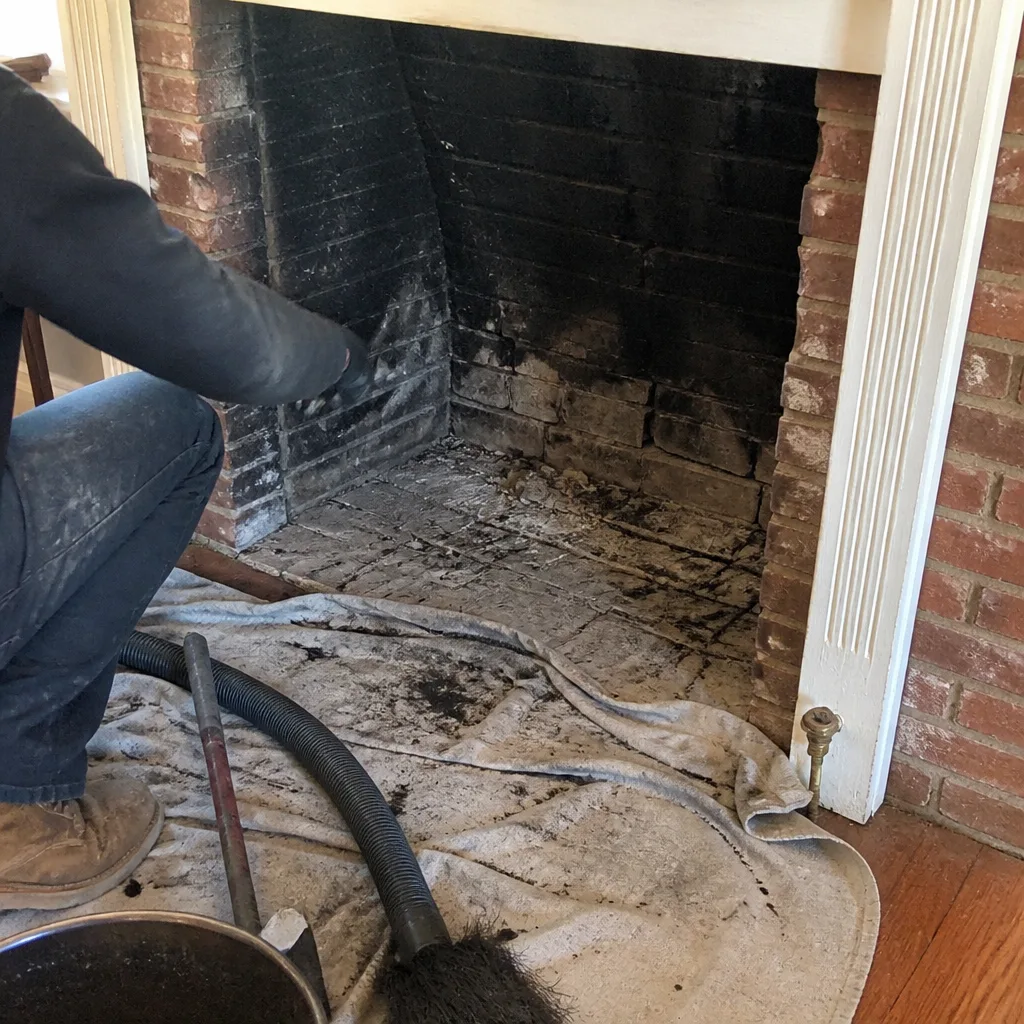 Before
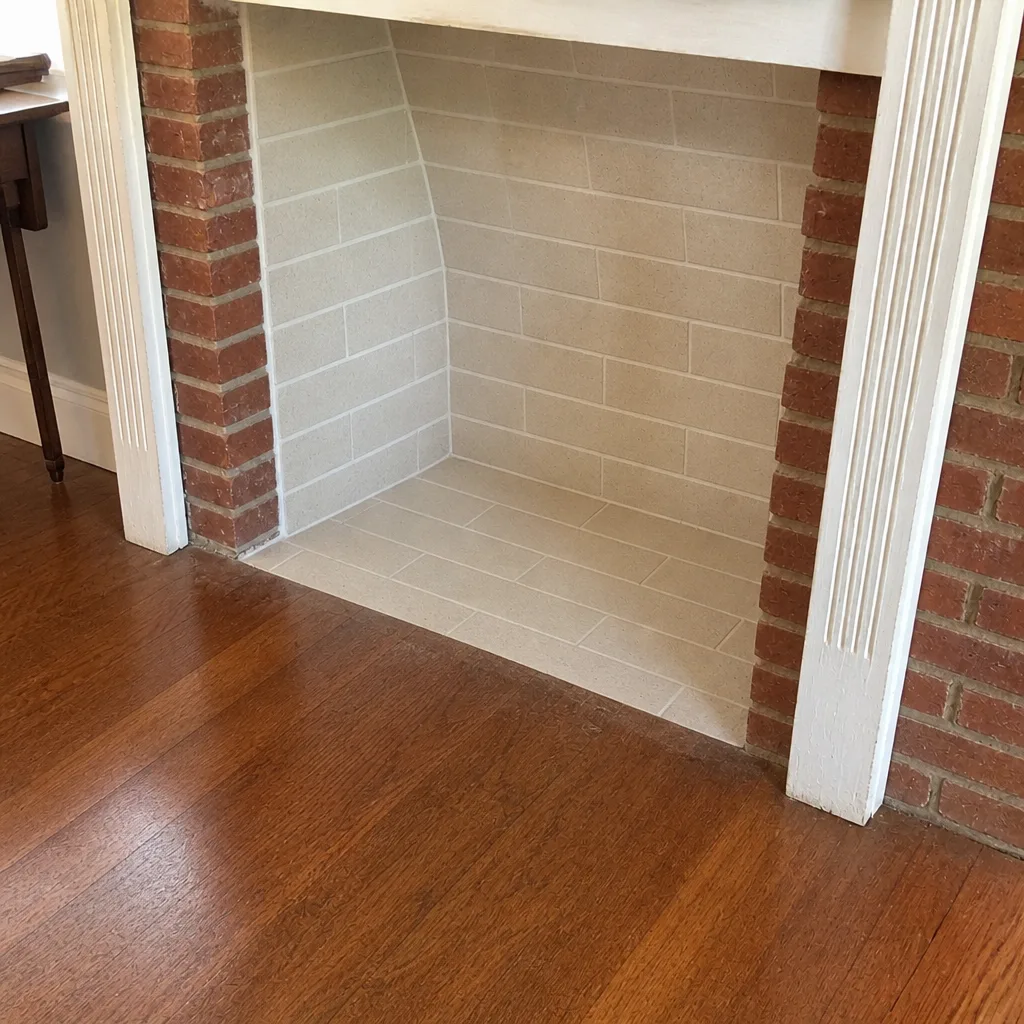 After
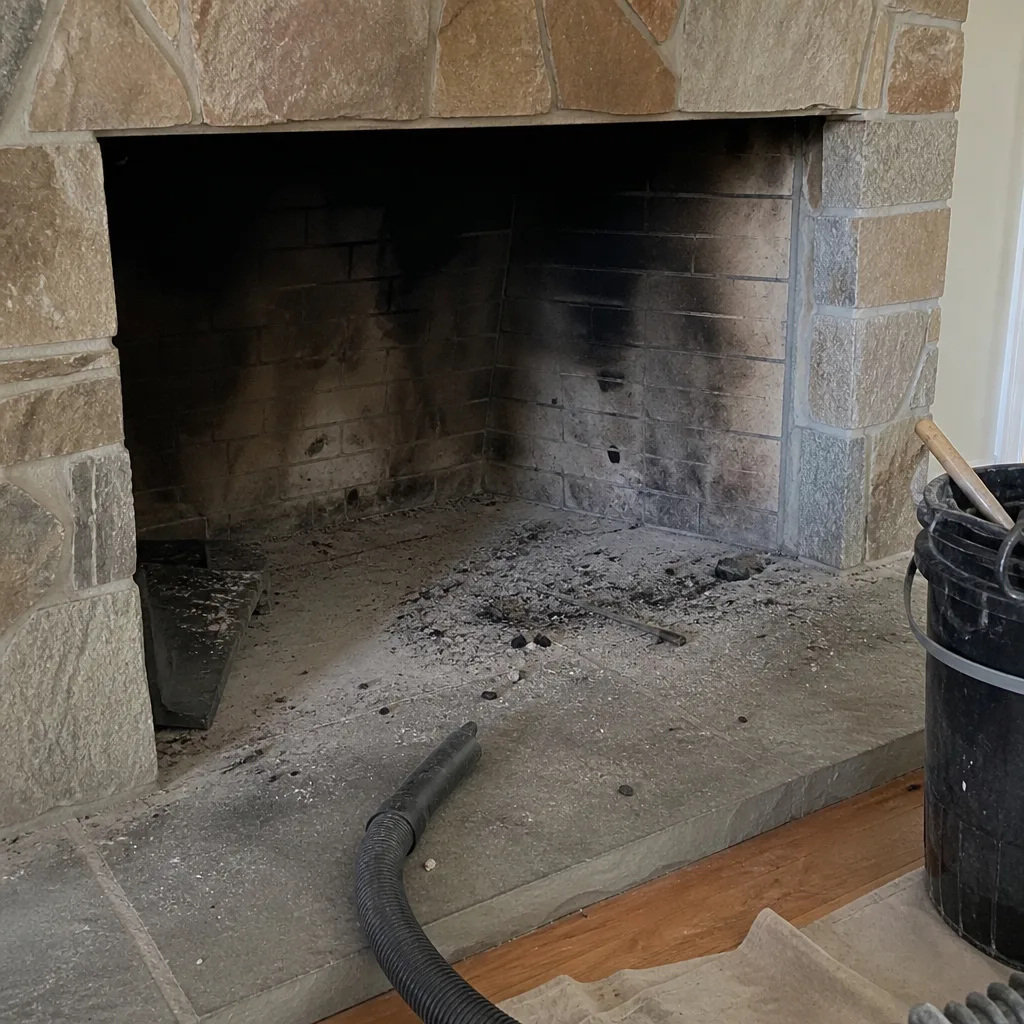 Before
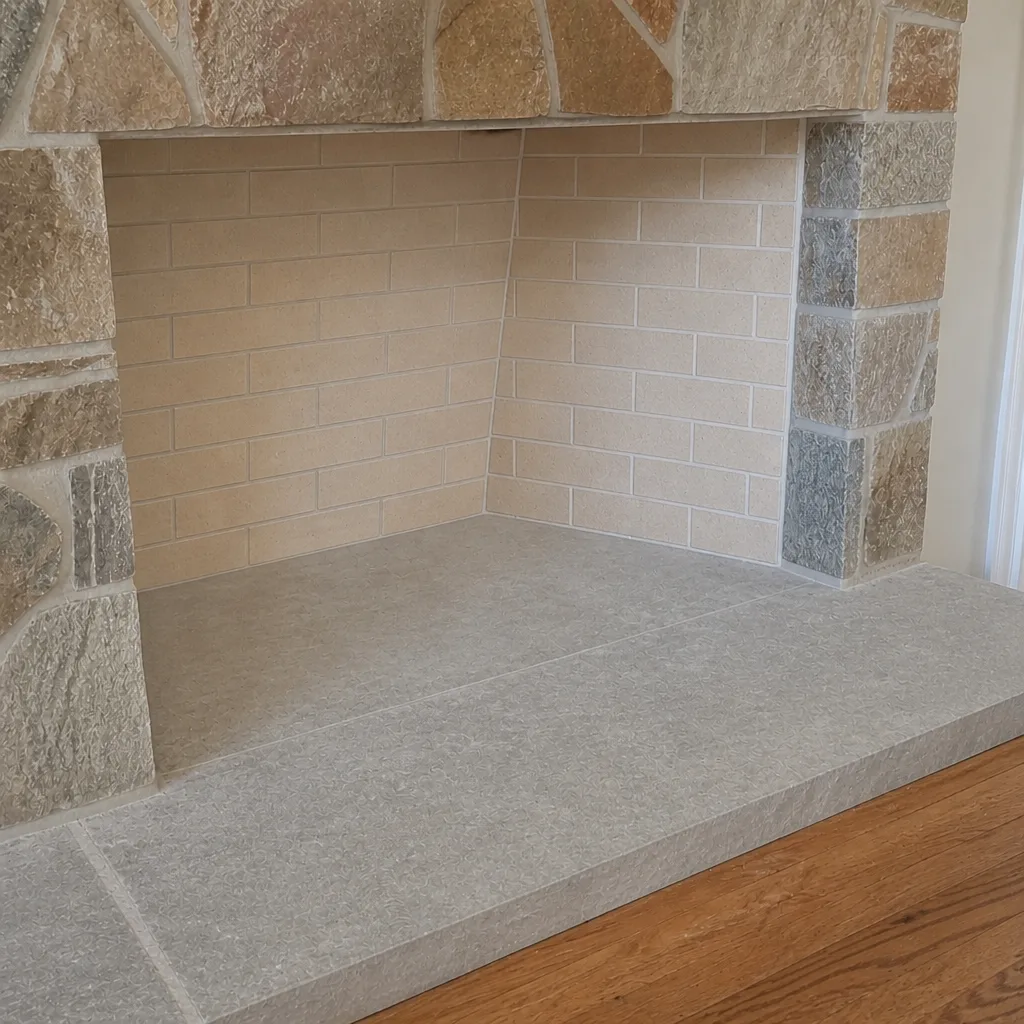 After
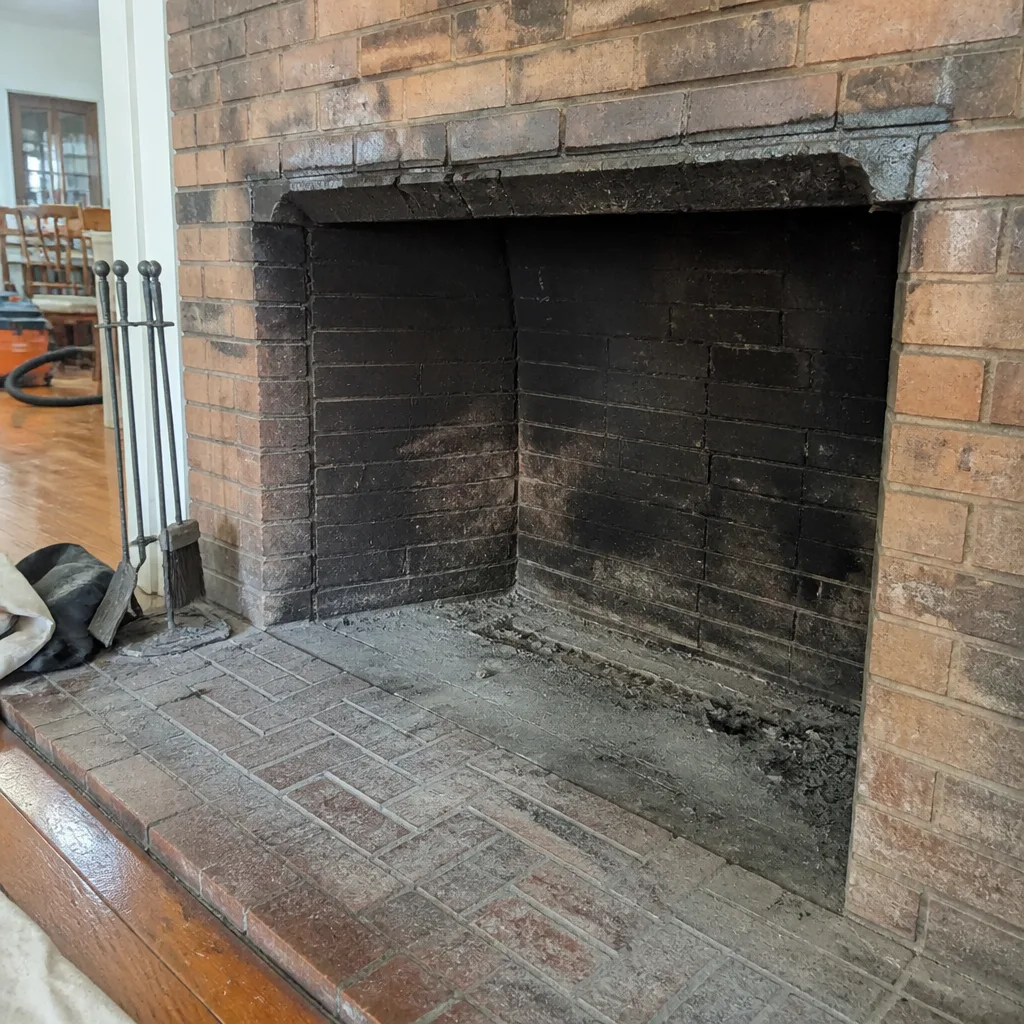 Before
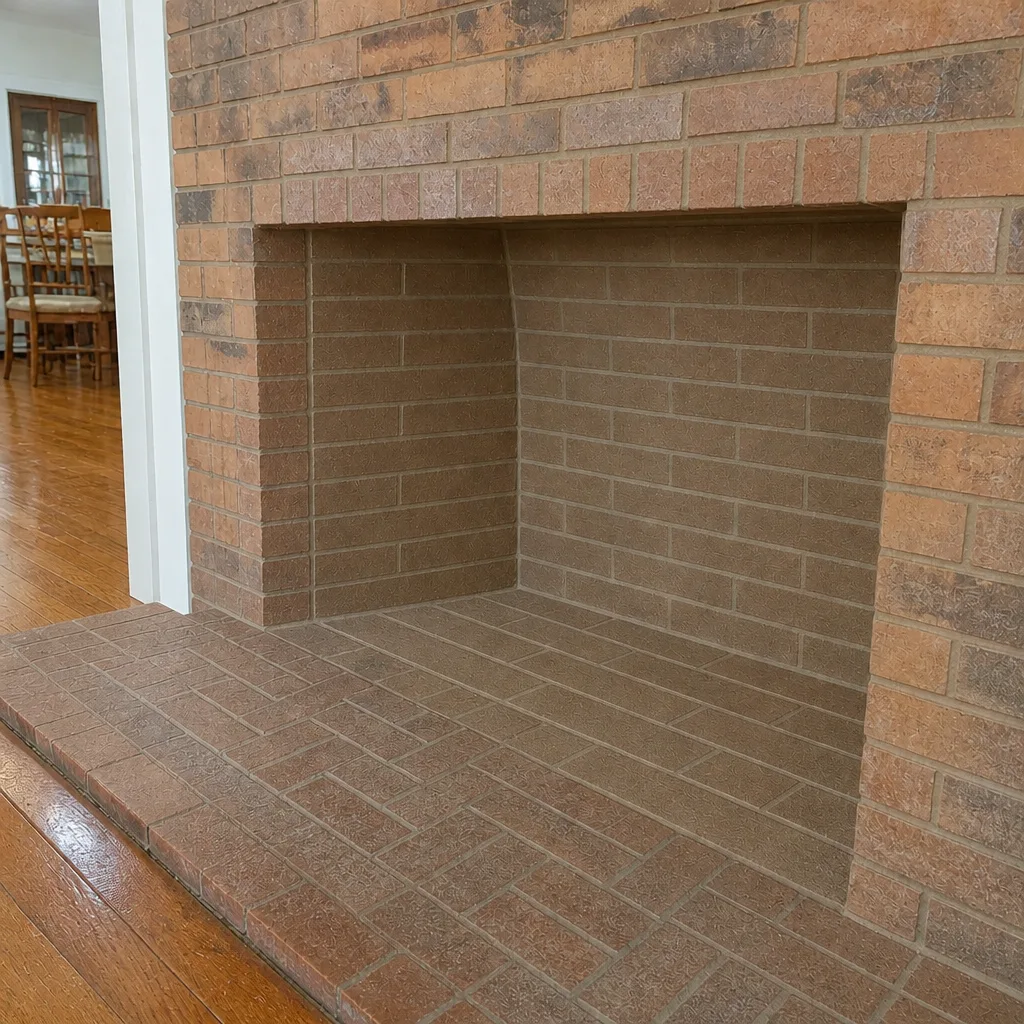 After
When to Call a Professional
Call a professional chimney team if you see any sign on the stop-now list above, if it’s been a year or more since your last sweep, if you’ve moved into a home with a fireplace you haven’t had inspected, or if you notice a smell, stain, or draft change you can’t explain. Also call if you’re switching from wood to a gas insert, or adding a new appliance to an existing flue. None of those are hands-off decisions. The right answer takes eyes on the flue, which is why we don’t diagnose over the phone.
If you’re in the Wilmington area and something at the chimney has you wondering, give us a call. Wilmington Chimney Cleaning offers free estimates in Wilmington – call (855) 947-5166. We answer 24/7. Fast dispatch from 7am to 7pm, Sunday through Friday. Our technicians have up to 13 years of experience, and chimney work is all we do.
Frequently Asked Questions
Efflorescence and spalling on the exterior, a rusted or missing chimney cap, a cracked crown, smoke rolling back into the room, and a musty smell that doesn’t clear are the signs we see most often. Any one of these is worth a look. Two or more together should prompt a call.
It’s usually a real problem. A musty smell means the chimney is holding moisture somewhere it shouldn’t, which in a humid climate like Wilmington’s is a sign the flue or masonry needs a closer look. Sometimes it’s a downdraft; sometimes it’s a wet liner. The two look similar from the living room and very different once the flue is examined.
Stop using the fireplace if smoke is rolling into the room, if you can see or hear evidence of fire in the flue, if creosote flakes are falling into the firebox, if the flue liner is cracked or loose, or if water is coming into the firebox. Those are stop-and-call situations. Efflorescence, a missing cap, a hairline crown crack, and a general musty smell can wait for a scheduled visit.
Most wood-burning fireplaces should be swept once a year when in regular use, and more often if you burn a lot or notice creosote buildup. A chimney inspection alongside the sweep catches signs a sweep alone won’t. Gas inserts and appliances have their own service intervals, which an inspection will confirm for your specific setup.
No, and you shouldn’t accept a diagnosis over the phone either. Chimney problems need the flue examined from the inside with eyes on the liner, the cap, and the firebox. We take your description seriously, but the actual diagnosis comes with the inspection. It costs nothing to get an estimate in Wilmington.
Note what you smell and when, when the sign first appeared, any recent changes to the house (windows, exhaust fans, new wood), and photograph your exterior chimney from the ground. We also use professional-tier components from lines like Gelco and Olympia Chimney when a repair needs a proper cap, damper, or venting part, so we can fit the chimney you have instead of a hardware-store substitute.
The Bottom Line
The warning signs that a Wilmington chimney needs attention are quiet more often than not. A white stain, a rusted cap, a musty smell that clears by November, a slightly weaker draft. Watch the exterior and interior signs in this guide, act on the stop-now list immediately, and put everything else on the schedule. A chimney sweep, repair, and inspection from a specialist catches the small problems while they’re still small. If something at your chimney has you wondering, call (855) 947-5166. We answer 24/7. Fast dispatch from 7am to 7pm, Sunday through Friday. Estimates are free.
Written by the team at Wilmington Chimney Cleaning.