
Last updated November 16, 2026
 Sweep & inspection
 Caps & crowns
 Flue relining
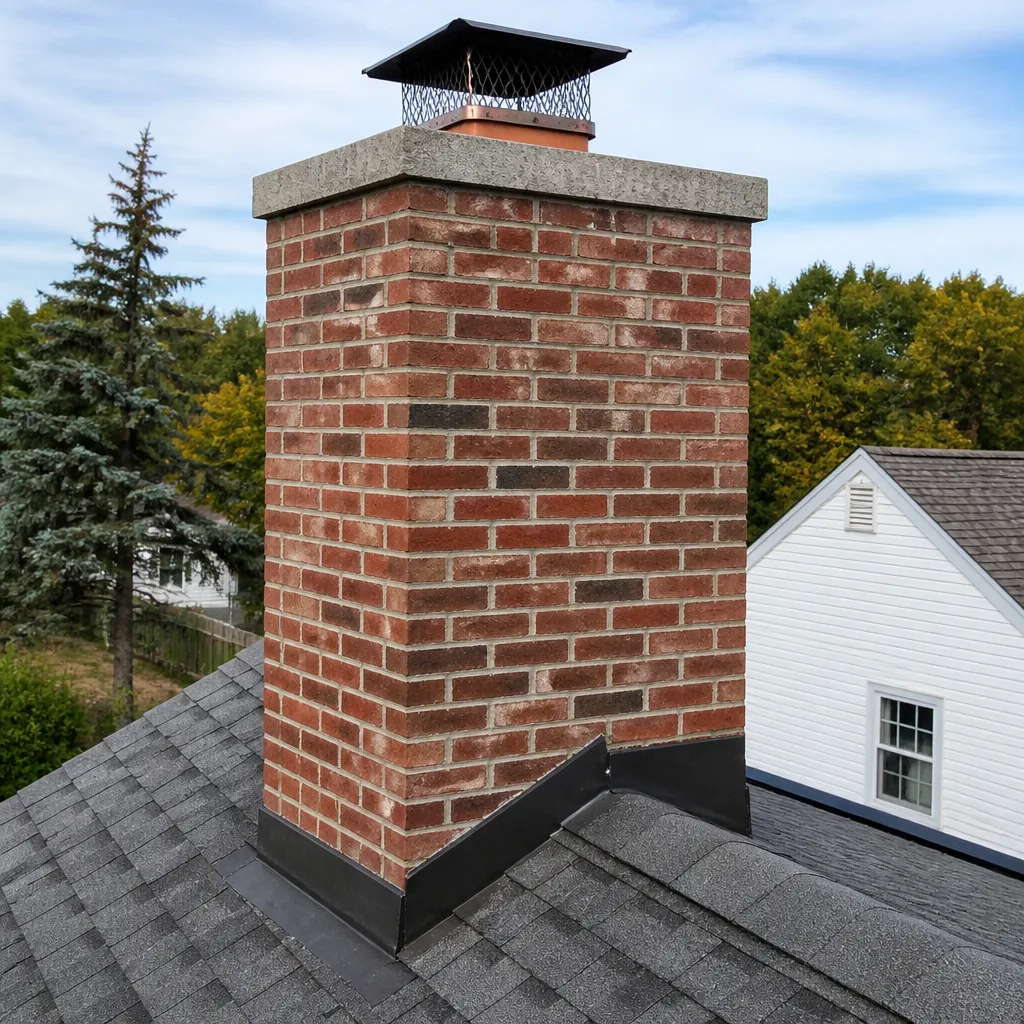 Masonry repair
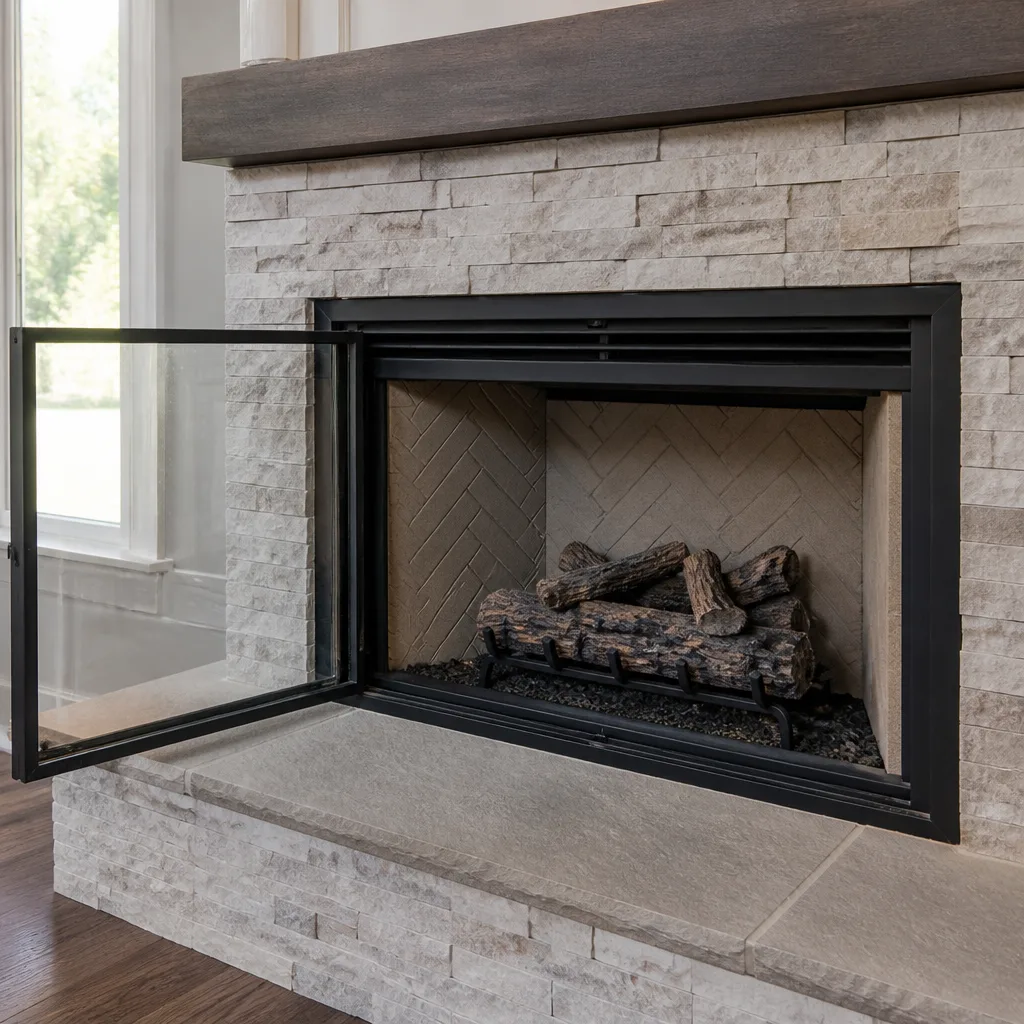 Gas fireplace service
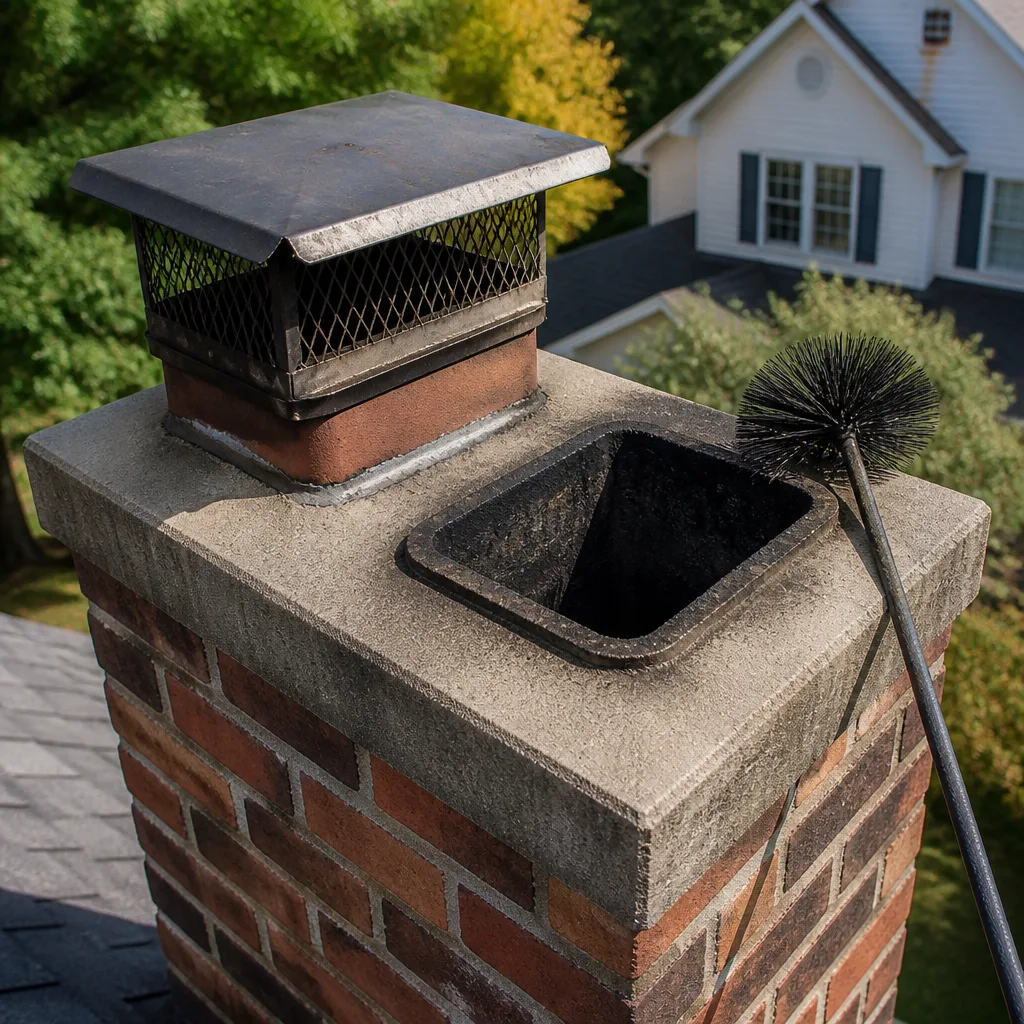
Level 1 sweep and inspection to the NFPA 211 annual standard - flue, crown, cap, and flashing checked and photographed
Chimney sweep logs do not sweep chimneys. They loosen some creosote - which then falls where a brush and vacuum still have to collect it.
Chimney Sweep Maintenance Checklist for Wilmington Homeowners
A chimney that looks fine from the living room can have a cracked flue liner, a nest blocking a big share of the flue, or spalling mortar one wet winter away from water intrusion. None of that shows up without knowing exactly where and how to look. Most chimney checklists you’ll find online were written for cold-climate wood-burners running a fire most nights from October to April. Wilmington doesn’t work that way. Here the burn season is short, the humidity is long, and the real damage usually comes from water and storms rather than from heavy use. This guide gives you a checklist built for Wilmington’s actual weather calendar, with a clear line between what you can safely observe yourself and what needs a camera and a professional.
Quick Answer
A Wilmington chimney maintenance checklist has three layers: monthly visual checks you can do safely from the ground and hearth, a professional sweep and inspection before each burn season, and a post-storm check after any tropical system or named storm. Because Wilmington’s burn season is short and the humid season is long, water intrusion and storm damage matter as much as creosote buildup. Schedule the professional sweep in late summer or early fall, before the first fire, and inspect again after hurricane season passes.
Styles & brands we work with
- Sweep & inspection
- Caps & crowns
- Flue relining
- Masonry repair
- Gas fireplace service
Table of Contents
- Why a Wilmington Chimney Needs a Different Checklist
- The Three Tiers of Chimney Maintenance
- Pre-Season Checklist: Before Your First Fire
- What You Can Safely Check Yourself
- What Requires a Camera and Professional Access
- Post-Storm Inspection After Hurricane Season
- A Month-by-Month Maintenance Rhythm for Wilmington
- The Items Homeowners Overlook Most
Why a Wilmington Chimney Needs a Different Checklist
Chimney failure patterns follow the local climate, and Wilmington’s climate is unusually hard on masonry in a way that has nothing to do with how much wood you burn. The region swings between hot, humid summers and cool, damp winters, and that cycle is the engine of most chimney damage we see. Masonry absorbs moisture during the humid months. When temperatures drop and that trapped water freezes and expands, the surface of brick and mortar flakes and spalls. Repeat that over several winters and joints open up, which lets in more water, which accelerates the whole process.
The burn season itself is modest. Wilmington homeowners tend to light fires on the coldest stretches of December, January, and February, with a few fires in November and March. That means creosote accumulates more slowly than in a northern home, so a homeowner who moved here from a colder state may assume the chimney needs less attention. The opposite is true. Low use means the chimney sits idle for most of the year, and an idle chimney in a humid climate is a chimney that collects moisture, nests, and debris without anyone noticing.
Wind-driven rain is the other local factor. Thunderstorms and tropical systems push water sideways against caps, crowns, and flashing in a way that gentle rain never does. A cap that’s slightly loose or a crown with a hairline crack can look harmless on a calm day and leak badly during a summer squall. That’s why this checklist treats the roofline components as seriously as the flue itself.
None of this means Wilmington chimneys are uniquely fragile. It means the maintenance rhythm has to match the weather. A northern checklist that centers on creosote and snow load misses the water, wind, and idle-season problems that actually drive repair work here. For a full picture of how we approach chimney repair in this climate, the failure patterns are worth understanding before anything goes wrong.
The Three Tiers of Chimney Maintenance
Every chimney checklist item falls into one of three tiers, and knowing which tier you’re in keeps you safe. The tier is set by how close you have to get and what you’re looking for.
- Tier 1 – Ground-level and hearth-level observation. These are checks you can do from the yard, the driveway, or standing at the fireplace. Binoculars help. You’re looking at exterior condition, not reaching into anything.
- Tier 2 – Accessible interior checks without tools. These are checks at the firebox and damper that require no ladder, no roof, and no disassembly. You’re confirming the damper moves, looking for obvious debris, and noting smells or staining.
- Tier 3 – Camera and professional access. These require a roof, a ladder, a chimney camera, or specialized tools. Flue liner condition, internal creosote thickness, crown and flashing integrity, and cap attachment all live here.
The mistake homeowners make is assuming Tier 1 and Tier 2 observations replace Tier 3. They don’t. Ground-level checks tell you when to call a professional sooner; they don’t tell you the flue is clean or the liner is sound. A chimney can look immaculate from the driveway and still have a cracked liner or a nest partway down the flue. Only a camera gets you that answer.
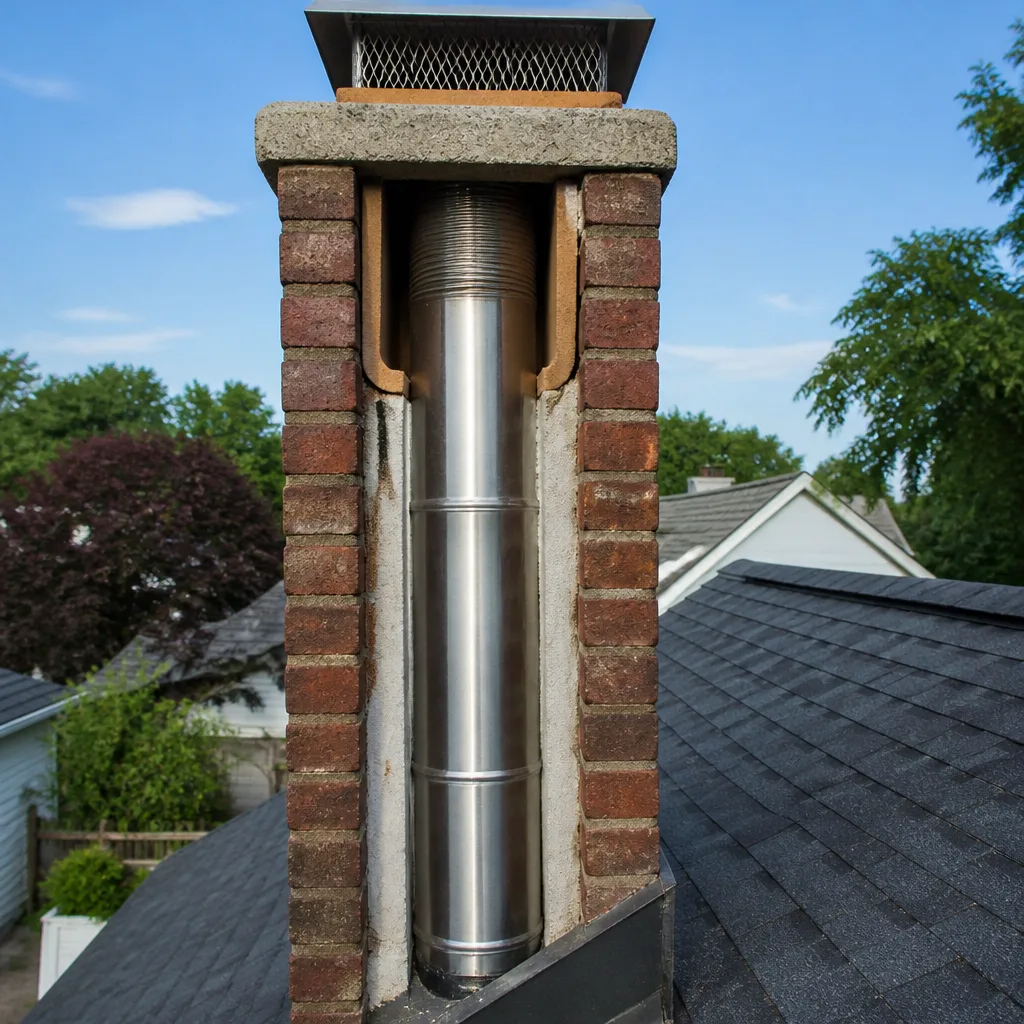
We use professional-grade equipment and materials from brands like DuraFlex and HeatShield because Tier 3 findings need Tier 3 solutions. DuraFlex flexible liner systems are engineered for the high-temperature environment inside a flue, and HeatShield lets us resurface a deteriorating liner in many cases instead of replacing it outright. Neither matters until someone has actually looked down the flue with a camera.
Pre-Season Checklist: Before Your First Fire
The pre-season checklist is the most important one of the year, and in Wilmington it should run in late August or September, before the first cool snap brings a fire. Here’s what a complete pre-season routine covers.
- Book the professional sweep and inspection. This is the anchor of the whole checklist. A sweep clears creosote, soot, and debris; the inspection that comes with it tells you the condition of the liner, cap, crown, and flashing.
- Confirm the damper opens, closes, and seals. A damper that sticks open wastes heat and lets humid summer air into the flue. A damper that won’t open fully is a smoke problem waiting to happen.
- Clear the firebox of ash and old debris. Excess ash restricts airflow and holds moisture. Remove it before the first fire, not after.
- Check the chimney cap from the ground. Look for a missing, tilted, or rusted cap. A cap that’s come loose lets in rain and wildlife.
- Look at the crown and flashing with binoculars. Cracks in the crown or lifting flashing are the two most common water entry points.
- Test smoke and carbon monoxide alarms. A wood-burning fireplace and any gas appliance share the same safety net. Confirm every alarm in the house works.
- Inspect the firebox for loose brick or crumbling mortar. From the hearth you can see surface condition. Anything loose or crumbling needs a professional look.
- Stock dry, seasoned firewood and store it away from the house. Wet wood produces more smoke and more creosote. Keep the woodpile off the exterior wall.
If you have a gas insert rather than a wood-burning fireplace, the pre-season list shifts slightly. You still want the annual inspection, and you still want the cap, crown, and flashing checked. Add a look at the venting components. We fit caps, dampers, and venting parts from Famco and Copperfield because those are professional-tier components, not the off-the-shelf substitutes that fail early. For a closer look at what a routine visit involves, see our chimney sweep page.
What You Can Safely Check Yourself
A good chunk of chimney maintenance is safe for a homeowner to do, as long as you stay at ground level and at the hearth. The line is simple: if it requires a ladder, a roof, or reaching into the flue, it’s not a homeowner check.
Safe homeowner checks:
- Exterior condition from the ground. With binoculars, look at the cap, the crown at the top of the chimney, the flashing where the chimney meets the roof, and the brickwork for obvious spalling or missing mortar.
- Damper operation. Open and close it fully. It should move smoothly and seat well when closed.
- Firebox surface condition. Look for loose brick, crumbling mortar joints, or cracks in the firebox walls. Note them and report them.
- Signs of moisture. Staining on the exterior brick, white powdery deposits, or dampness around the firebox are all worth flagging.
- Smell and draft. A strong smoky smell when no fire is burning, or smoke that rolls into the room instead of up the flue, is a signal to call a professional.
- Alarm function. Test smoke and carbon monoxide alarms regularly. This is squarely a homeowner job.
What’s not a homeowner check, no matter how careful you are:
- Climbing onto the roof to look at the cap or crown up close.
- Reaching into the flue to feel for creosote or blockages.
- Inspecting the flue liner, which requires a camera.
- Removing a bird or animal nest from the flue.
- Attempting to clean creosote yourself with a brush on a pole from the roof.
Roof work is a genuine fall hazard, and creosote is a genuine fire hazard. If a check requires either, it belongs with a professional. Our technicians have up to 13 years of experience, which is exactly the kind of access you want doing the Tier 3 work.
What Requires a Camera and Professional Access
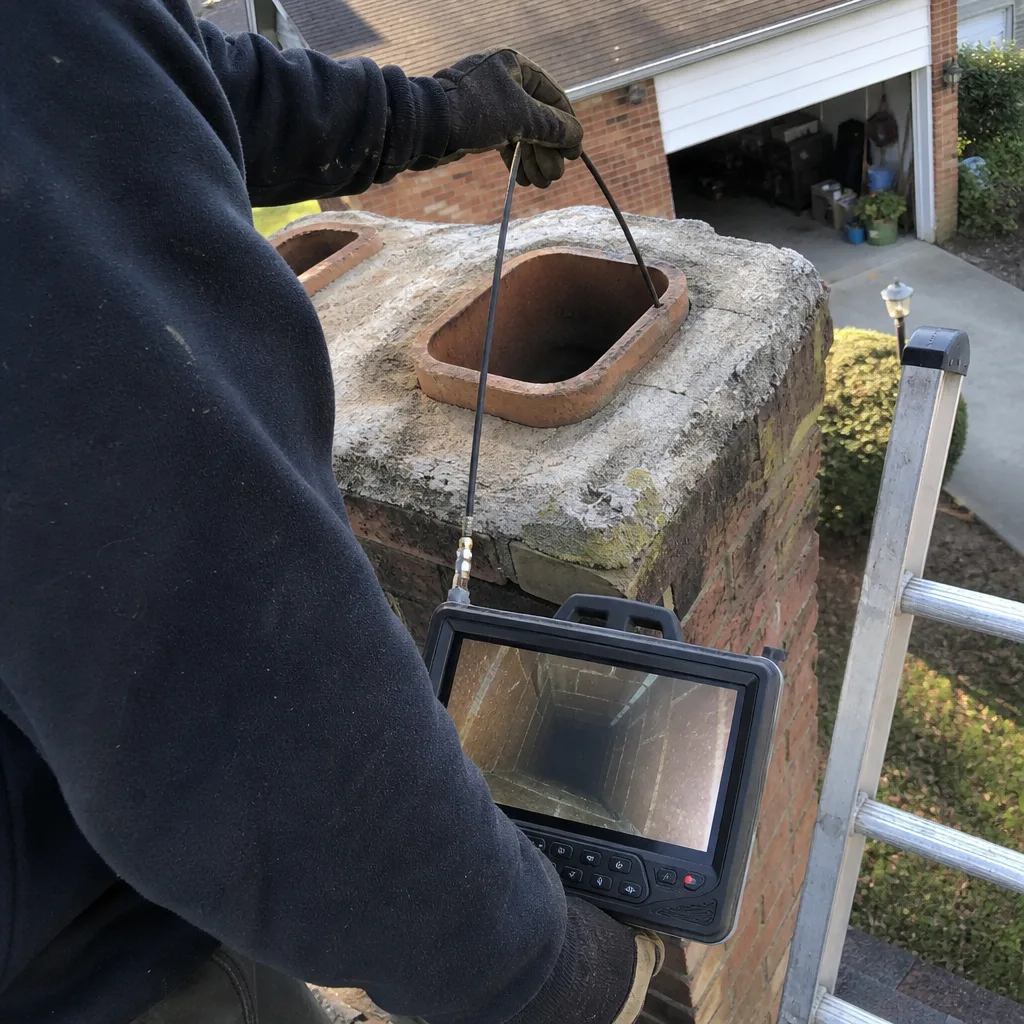
The most important part of a chimney inspection is the part you can’t see. A camera inspection is what separates a guess from an answer, and it’s the reason we don’t recommend liner or masonry work without one.
Here’s what a professional inspection with a camera actually covers:
- Flue liner condition. The liner is the barrier between the flue gases and the combustible structure of your house. Cracks, gaps, and deteriorated joints show up on camera, and they don’t show up any other way.
- Internal creosote thickness. Creosote builds in layers, and the difference between a light glaze and a thick, tar-like deposit is a camera finding, not something you can eyeball from the hearth.
- Blockages. Nests, debris, and collapsed liner sections can block a meaningful portion of the flue. A camera shows you the blockage and how much of the flue it takes up.
- Cap attachment and condition. Up close, a cap that looked fine from the ground may be loose, cracked, or missing its screen.
- Crown integrity. Cracks and separation at the crown are visible up close and are a leading cause of water intrusion.
- Flashing at the roofline. Flashing failures let water in at the roof-chimney junction, and they’re easy to miss from the ground.
When the camera finds a deteriorated liner, we don’t automatically jump to full replacement. HeatShield is an industry-standard flue resurfacing system that lets us repair a liner in many cases and extend its life without a full tear-out. When replacement is the right call, we source DuraFlex flexible liner systems, which are built for the high-temperature environment inside a chimney. Either way, you should see the camera footage and understand the finding before any work is agreed. That’s the standard we hold ourselves to, and it’s the standard you should expect from anyone working on your chimney.
Post-Storm Inspection After Hurricane Season
Wilmington’s hurricane and tropical storm season runs from June through November, and it’s the reason this checklist includes a second major inspection each year. Wind-driven rain, flying debris, and falling limbs can damage roofline components that were fine in the spring. Most of that damage is invisible from the ground.
After any named storm or significant tropical system, check these points:
- Look for missing or shifted caps. A wind gust can lift a cap or knock it sideways. If the cap is gone or sitting crooked, water and wildlife have an open door.
- Inspect the crown for new cracks. Compare what you see now against your pre-season notes. New cracks after a storm are worth a professional look.
- Check the flashing and the roof around the chimney. Wind-driven rain finds lifting flashing fast. Look for staining or moisture on the chimney’s exterior and on the roof deck nearby.
- Scan the brickwork for new spalling or missing mortar. Impact from debris shows up as chipped or broken brick. Moisture damage shows up as flaking.
- Look for debris on the roof and around the cap. Branches and leaves can block the cap screen or sit against the chimney and hold moisture.
- Check the firebox and damper inside for water. Dampness around the firebox after a storm is a sign that something up top is letting water in.
You don’t need a storm to justify an inspection. If you’re not sure how your roofline survived the season, book an inspection and get a camera answer. Wind and water don’t announce themselves, and a chimney that looks intact from the driveway can have a loose cap or a hairline crown crack that only shows up in a downpour. For homeowners comparing what’s normal for this area, our Wilmington page covers the local weather patterns in more detail.
A Month-by-Month Maintenance Rhythm for Wilmington
Wilmington’s burn season and weather calendar make a specific yearly rhythm sensible. Here’s how we’d map the year for a typical wood-burning fireplace in the area.
- Late summer (August-September): Book the pre-season sweep and inspection. This is the essential one. Clear the firebox, test alarms, and confirm the damper works.
- Early fall (October-November): First fires. Watch the draft and note any smoke rollback. Stock dry, seasoned wood. A post-storm check if a system has passed through.
- Winter (December-February): Burn season. Keep an eye on the firebox surface and the fire’s draft. Clear ash as it builds. A mid-season look at the firebox and damper is worth the two minutes.
- Early spring (March-April): Last fires. Once the season ends, clean out ash and do a ground-level check of cap, crown, and flashing. Book a spring inspection if you burned heavily or noticed anything off.
- Late spring through summer (May-June): Humid season begins. This is prime time for moisture problems to develop. Ground-level checks after each storm and a look for staining or dampness at the firebox.
- Hurricane season (June-November): Post-storm ground-level checks after any tropical system. Book a professional post-storm inspection if you see damage or if a storm was severe.
That rhythm gives you two professional touchpoints a year if you choose: a pre-season sweep and inspection, and a post-storm inspection after hurricane season. Homeowners with a gas insert can trim the mid-season checks but should keep the annual inspection and the post-storm checks.
The Items Homeowners Overlook Most
Three components cause a disproportionate share of the water damage we see, and all three are easy to forget because they’re at the roofline, not in the firebox.
The chimney cap
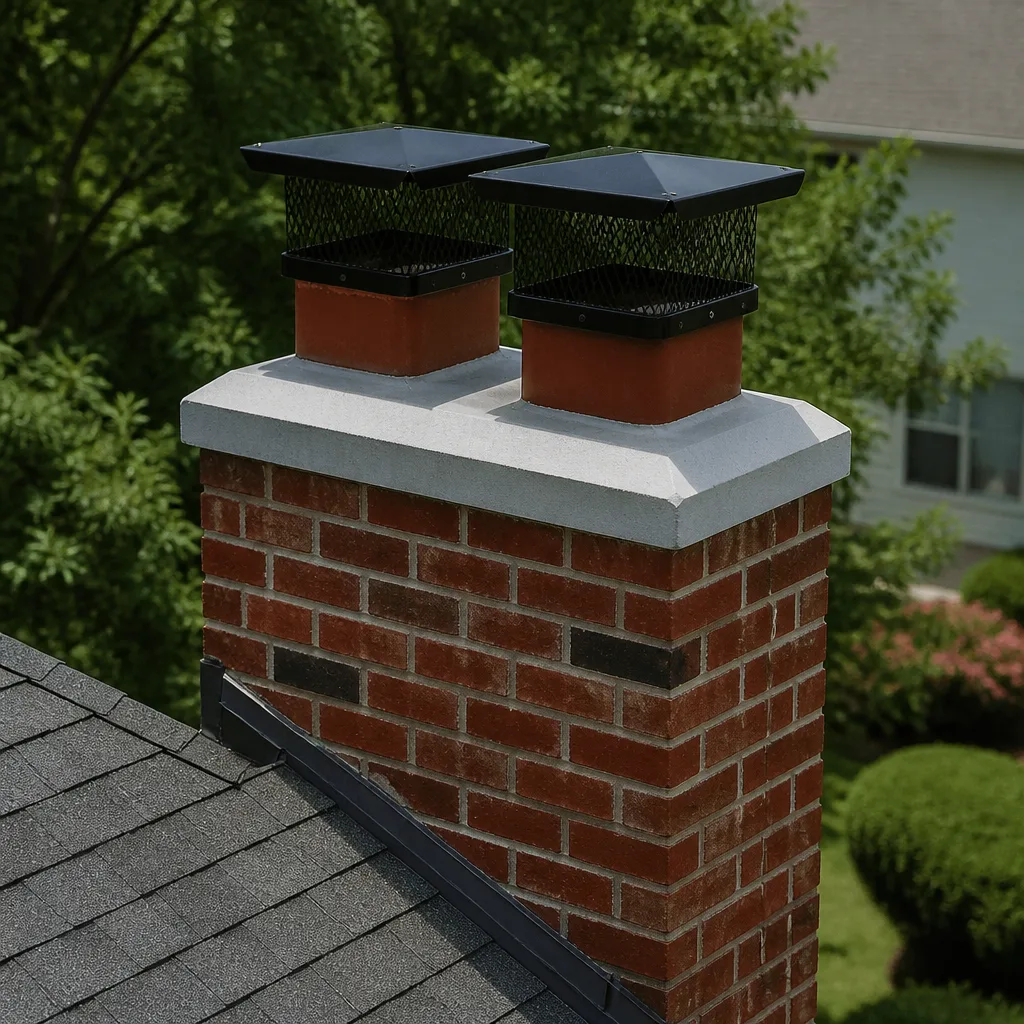
The cap keeps rain, debris, and wildlife out of the flue. When it’s missing, loose, or rusted through, everything it was meant to block gets in. A missing cap is one of the most common reasons a flue fills with water and nests between burn seasons. Check it from the ground with binoculars after every storm, and have it looked at up close during the annual inspection.
The crown
The crown is the concrete or mortar surface at the very top of the chimney that sheds water away from the flue. Hairline cracks in the crown seem trivial, but water that gets into the crown freezes and expands in winter, opens the cracks, and works its way down into the masonry. That’s how a chimney that was structurally sound in October starts spalling by the following spring. Crown condition is a professional check, so make sure it’s on the inspection list.
Flashing at the roofline
Flashing is the metal that seals the junction between the chimney and the roof. It’s the most overlooked leak source in the whole system, because it fails gradually and invisibly. Water entering at the flashing often shows up as a stain on the ceiling or dampness around the firebox long after the actual leak started. Get the flashing checked during the annual inspection and after any storm with heavy wind-driven rain.
There’s a fourth item that isn’t a component but is worth naming: the flue liner. Homeowners often assume that if the fire draws and smoke goes up, the liner is fine. Draft is not a liner test. Only a camera inspection confirms liner integrity, and a deteriorated liner is the finding most worth catching early.
Common Mistakes to Avoid
- Treating a northern checklist as your own. A schedule built for heavy, cold-climate burning misses the moisture and storm damage that drive problems in Wilmington. Build your checklist around the humid season and hurricane season, not just creosote.
- Assuming low use means low maintenance. A chimney that burns a few fires a winter still needs an annual inspection. Idle flues in a humid climate collect water, nests, and debris.
- Skipping the post-storm check. Damaged caps, cracks in the crown, and lifting flashing don’t always show up immediately. A ground-level check after each tropical system catches problems before the next rain.
- Trusting a ground-level look as a full inspection. Binocular checks tell you when to call a professional. They don’t tell you the liner is sound. Only a camera does that.
- Ignoring the cap, crown, and flashing because the fireplace works. A well-drawing fire doesn’t mean the roofline components are intact. Water damage starts up top and shows up inside much later.
- Climbing onto the roof to check things yourself. Roof work is a fall hazard, and creosote is a fire hazard. Both are professional work. Stay on the ground.
- Agreeing to liner or masonry work without seeing the evidence. The camera footage should back up any recommendation. If you can’t see the finding, ask to.
See the difference
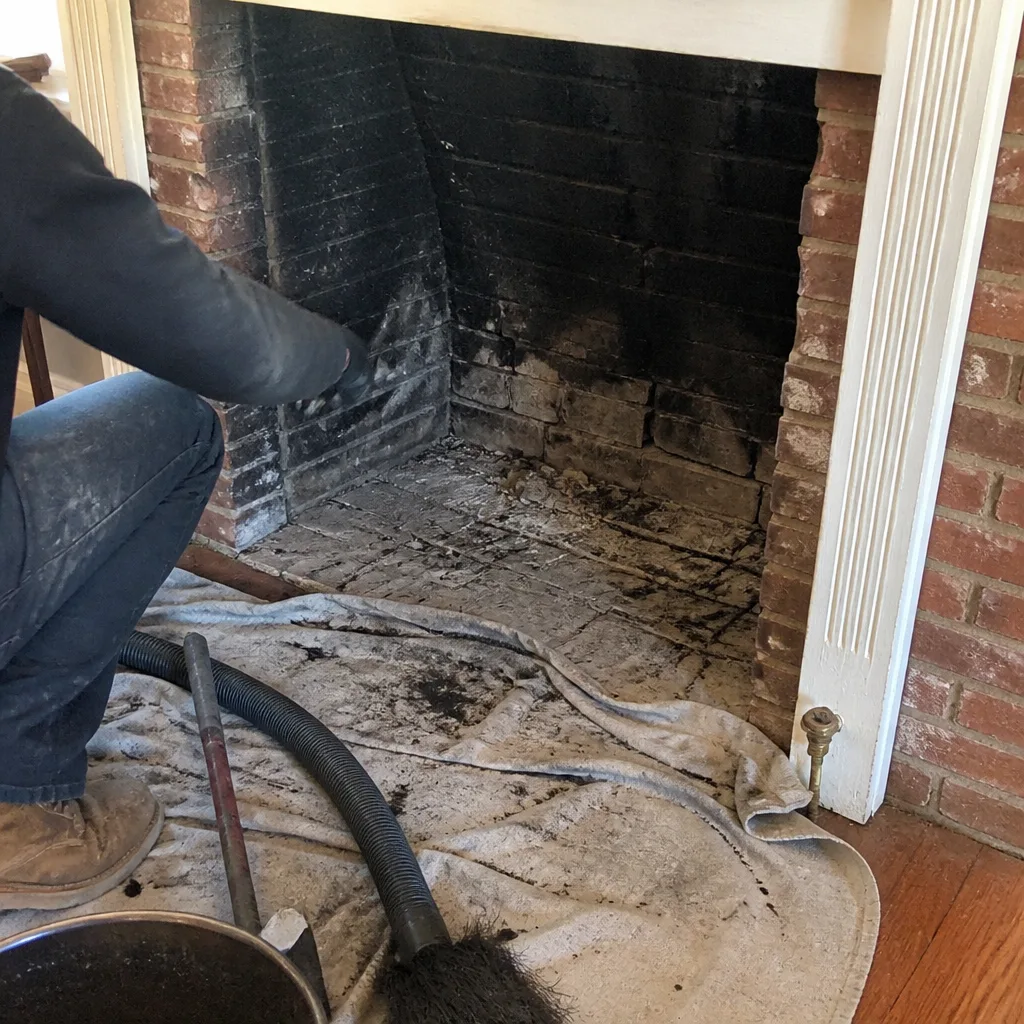 Before
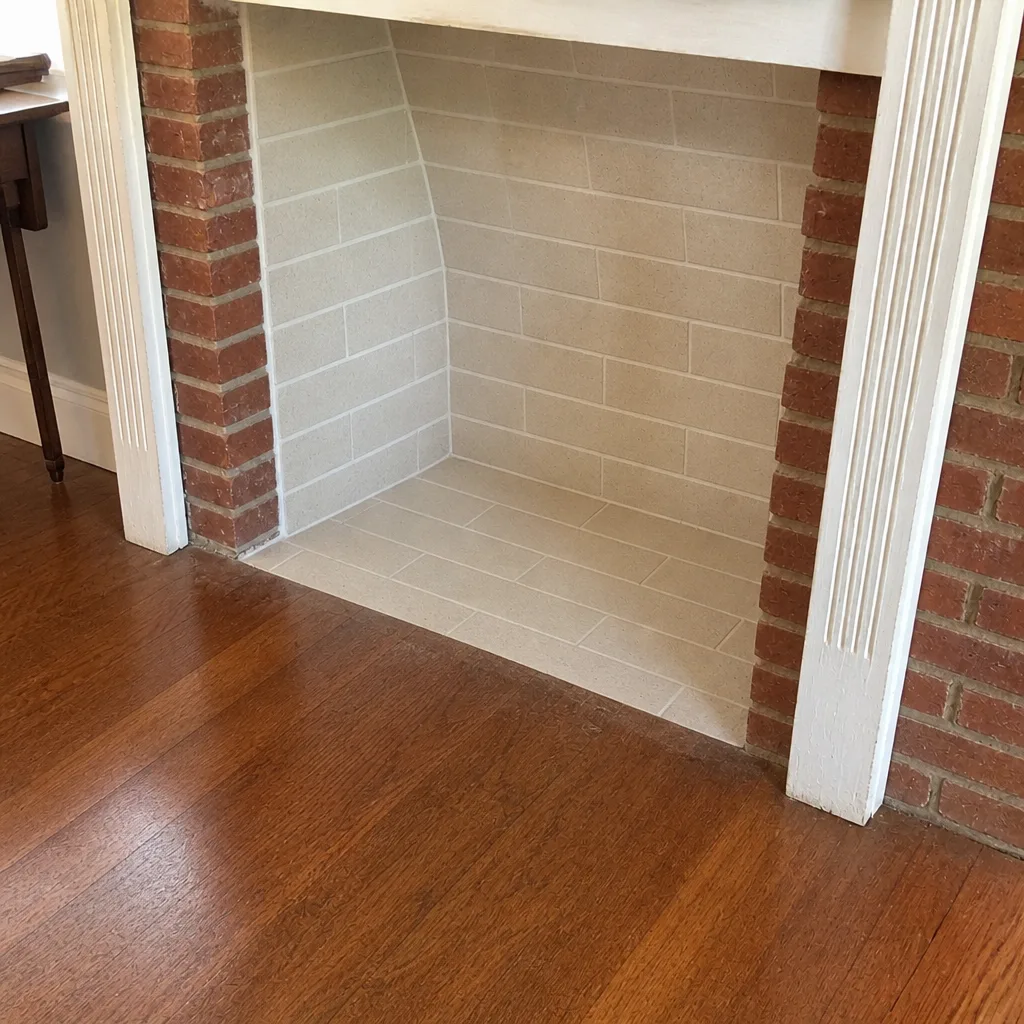 After
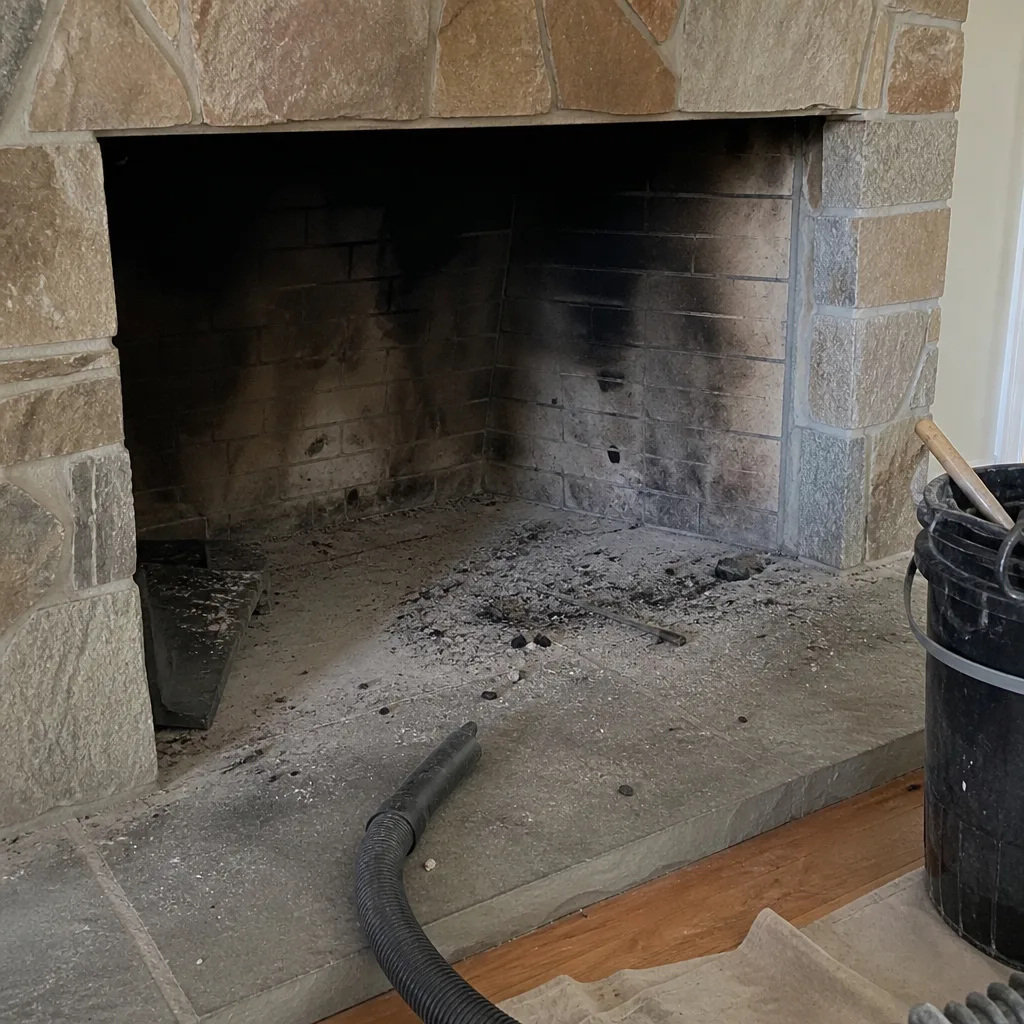 Before
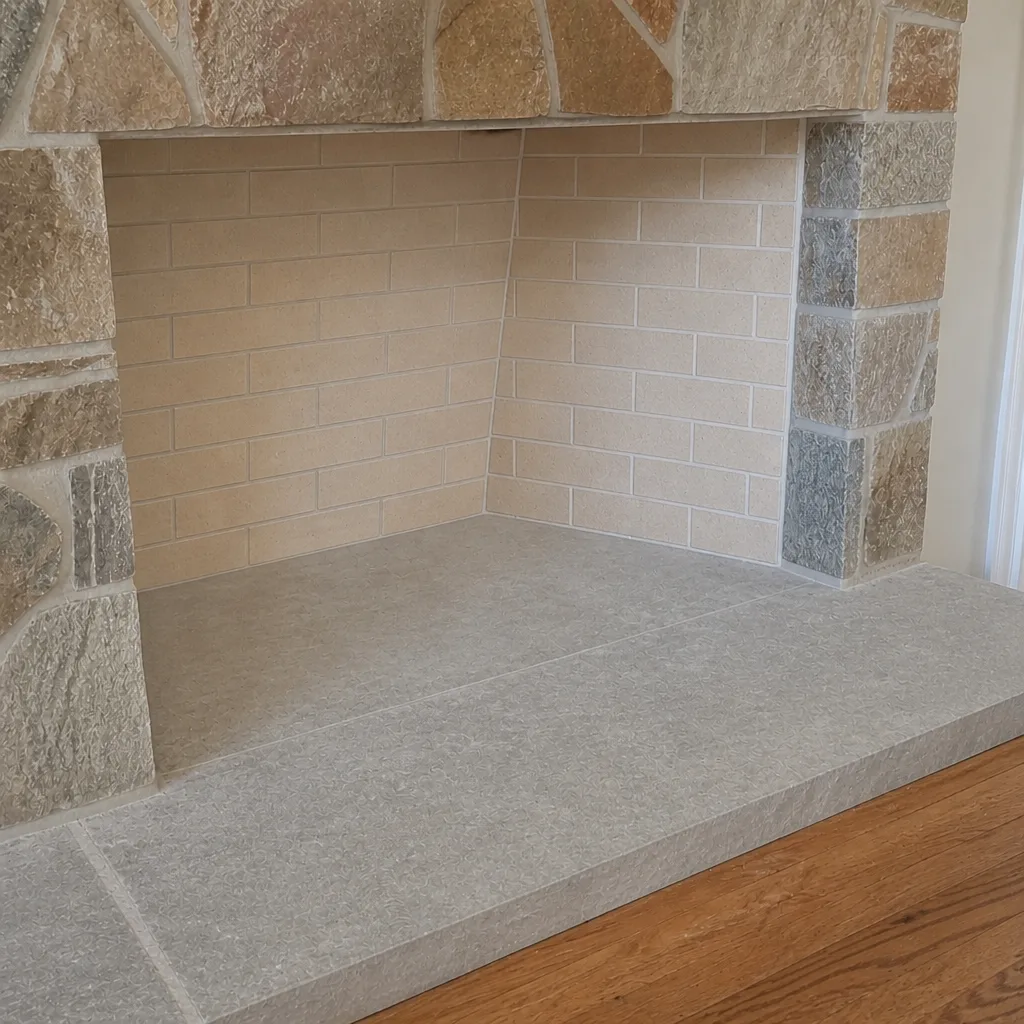 After
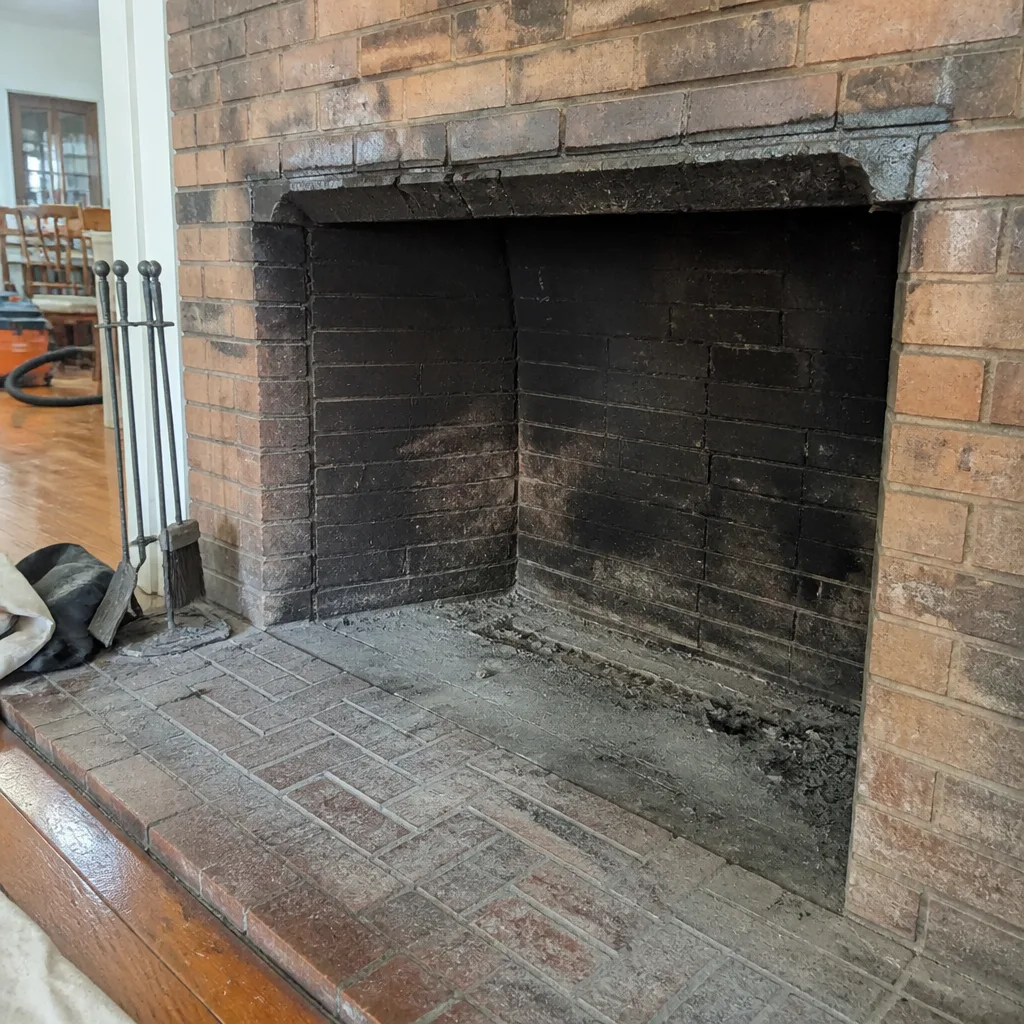 Before
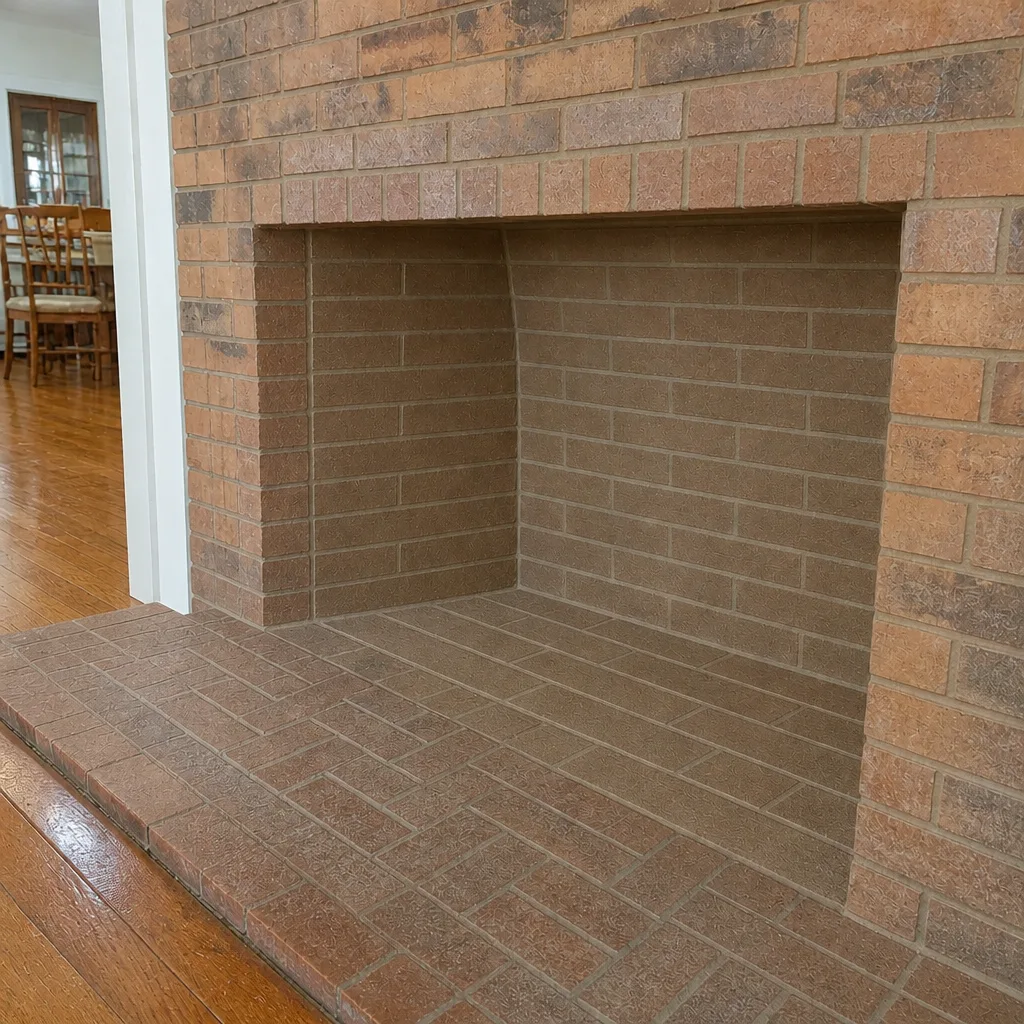 After
When to Call a Professional
Call a professional when a ground-level or hearth-level check turns up anything you can’t safely resolve. That includes a missing or loose cap, visible cracks in the crown, staining or dampness around the firebox, smoke that rolls into the room instead of up the flue, a strong smoky smell when no fire is burning, and any new damage after a storm. Call before your first fire each season as a matter of routine, and call after hurricane season passes if you haven’t had an inspection since spring. If you’ve moved into a home with a chimney and don’t know its history, an inspection is the first thing to book. Wilmington Chimney Cleaning offers free estimates in Wilmington; call (855) 947-5166. We answer 24/7. Fast dispatch from 7am to 7pm, Sunday through Friday.
For a broader view of how a full visit works end to end, start with Wilmington Chimney Cleaning, then let the inspection findings steer the rest.
Frequently Asked Questions
Once a year, plus a post-storm inspection after any named storm or significant tropical system. Because Wilmington’s burn season is short but the humid season is long, the annual inspection should focus on water intrusion, cap and crown condition, and flashing as much as on creosote. If you’ve noticed smoke rollback, dampness around the firebox, or new damage after a storm, don’t wait for the yearly visit; call (855) 947-5166 for a free estimate.
Yes, and it’s more important than the fire count suggests. Low-use chimneys sit idle through the humid season, and an idle flue collects moisture, nests, and debris that a camera inspection can find. An annual sweep and inspection catches those problems before they turn into liner or masonry damage. Call (855) 947-5166 to book one.
Ground-level and hearth-level checks only. With binoculars you can look at the cap, crown, and flashing; at the hearth you can test the damper, look at the firebox surface, check for staining or dampness, and note any smoky smell or draft problems. Anything that requires a ladder, the roof, or reaching into the flue is professional work. Call (855) 947-5166 for anything above Tier 2.
Check for a missing or shifted cap, new cracks in the crown, lifting flashing, new spalling or broken brick, and debris on the roof or against the cap. Inside, look for water around the firebox. If you see anything, book an inspection; wind-driven rain finds roofline damage that’s invisible from the ground. Call (855) 947-5166 for a free estimate.
No. Draft only tells you air is moving up the flue. It says nothing about whether the liner is cracked, gapped, or deteriorated. Liner condition requires a camera inspection. That’s also why HeatShield and DuraFlex work should never be recommended without camera evidence you can see for yourself. Call (855) 947-5166 to book an inspection.
The main risks are water damage from a failed cap, crown, or flashing, and fire risk from creosote buildup or a deteriorated liner. In Wilmington’s climate, moisture damage often shows up as spalling brick and crumbling mortar after a few winters. A maintenance rhythm catches these early and keeps the repair path simpler. Call (855) 947-5166 for an inspection and a written estimate.
The Bottom Line
A Wilmington chimney checklist isn’t a northern checklist with a different city name on it. The local rhythm is: one pre-season sweep and inspection before the first fire, ground-level checks through the burn season, a post-storm check after hurricane season, and an annual focus on the items that actually fail here: cap, crown, flashing, and liner. Stay on the ground when you check things yourself. Let a camera answer the liner question. And expect to see the evidence before you agree to any repair work. If you’d like a free estimate, call (855) 947-5166. We answer 24/7. Fast dispatch from 7am to 7pm, Sunday through Friday. Book your pre-season inspection before the first cool snap, not after.
Written by the team at Wilmington Chimney Cleaning.